
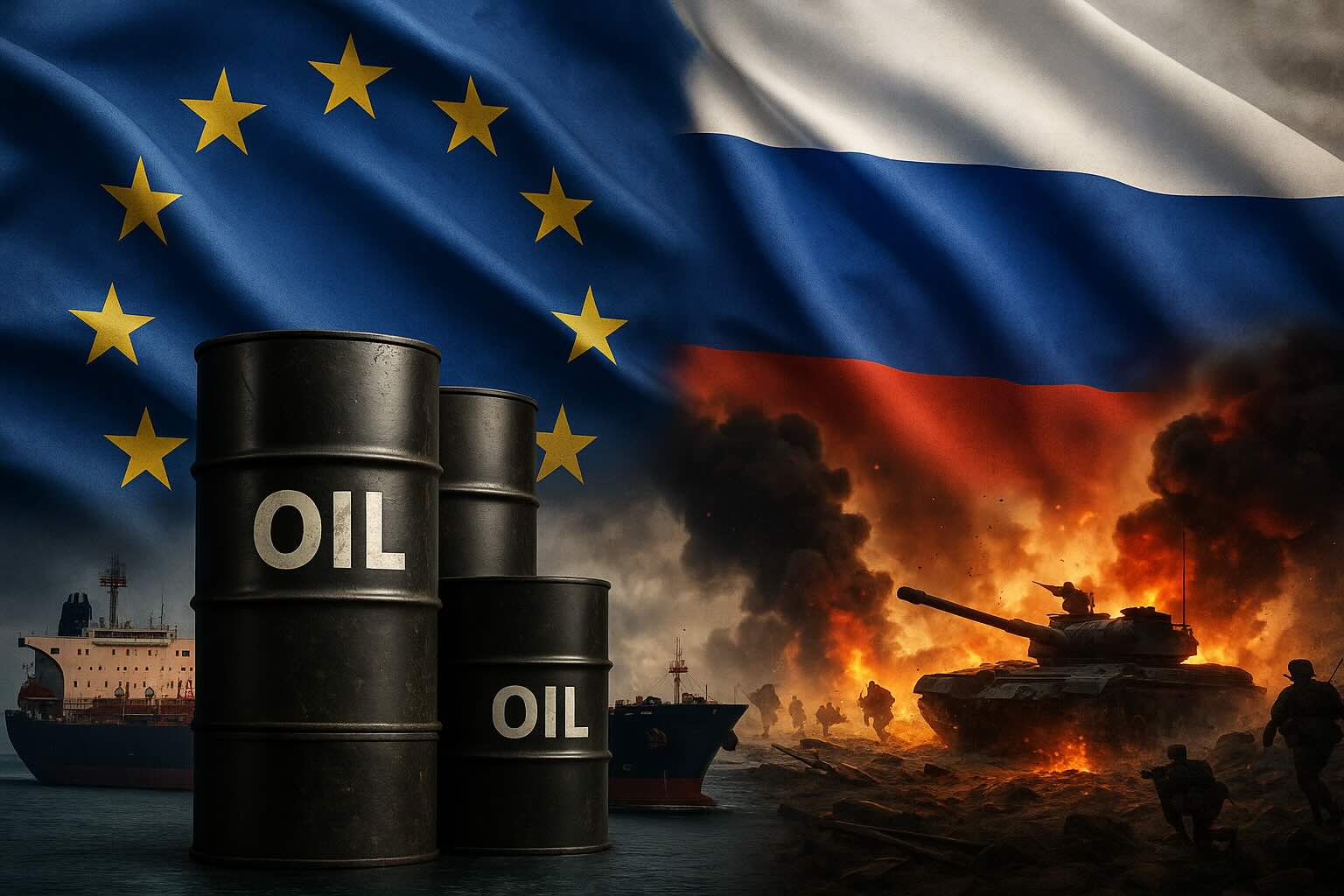
European Commission President Ursula von der Leyen has unveiled a new wave of penalties against Moscow, focusing on entities outside the EU that allegedly facilitate Russia’s energy exports. The proposed measures aim to counteract efforts by foreign companies, including those in China, to circumvent existing restrictions on Russian oil purchases.
The initiative, set for discussion among member states, requires unanimous approval before implementation. It expands sanctions beyond European borders, targeting third-country firms accused of violating earlier trade barriers. Von der Leyen emphasized the need to address “loopholes” in financial systems, including crypto platforms and foreign banks linked to Russian alternative payment networks.
Russia has become a major oil supplier to China and India since 2022, with both nations resisting Western pressure to reduce reliance on Moscow’s crude. Kremlin leader Vladimir Putin has criticized the EU for adopting an “unfair” stance toward developing economies, warning against attempts to penalize them.
The package includes a ban on Russian liquefied natural gas imports into the EU, additions to a blacklist of 118 vessels linked to Russia’s shadow fleet, and full transaction embargoes on energy giants Rosneft and Gazpromneft. It also introduces restrictions on entities operating in special economic zones and expands financial penalties to include cryptocurrency transactions.
Von der Leyen highlighted the measures as a response to heightened conflict, citing recent missile strikes on Kyiv and alleged drone incursions into Poland and Romania. Moscow has dismissed these claims as “baseless.” The EU’s 19th package also includes plans to finance Ukraine using frozen Russian assets, with funds allocated for reparations without touching the original holdings.
The move underscores growing pressure on Russia amid ongoing tensions, as the bloc seeks to tighten economic constraints while navigating complex geopolitical dynamics.