
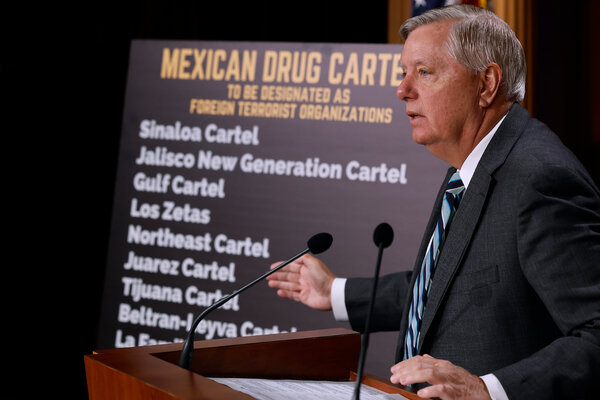
In a confidential memo addressed to Congress, President Donald Trump has officially classified drug cartels in North and South America as terrorist organizations, declaring the United States is engaged in a formal “non-international armed conflict” with these groups. The document asserts that suspected smugglers affiliated with these cartels are deemed “unlawful combatants,” marking a significant escalation in U.S. military strategy against drug trafficking networks.
The administration’s move follows recent strikes on Venezuelan drug vessels, which have been characterized as part of a broader campaign to dismantle transnational criminal operations. The memo emphasizes that the President acted under his constitutional authority as Commander in Chief to protect American interests and national security. It claims that cartels pose an existential threat, with alleged annual deaths of tens of thousands of U.S. citizens due to drug-related violence and overdoses.
Legal experts have raised concerns over the administration’s rationale, arguing that designating non-state actors as terrorists and legitimizing military strikes against them stretches the boundaries of international law. Critics highlight that the justification hinges on a narrow interpretation of “hostilities,” with some dismissing the approach as an overreach of executive power. The memo also cites a September 15 strike on Caribbean vessels, which killed 17 individuals, as part of a sustained conflict rather than isolated self-defense actions.
The White House has defended the measures, framing them as necessary to eliminate “national security threats” posed by drug trafficking organizations. However, the focus on Venezuelan targets has drawn scrutiny, given that fentanyl-related deaths in the U.S. are predominantly linked to Mexican cartels. The administration’s legal arguments remain contentious, with ongoing debates over the implications of treating drug war efforts as an armed conflict under international law.