
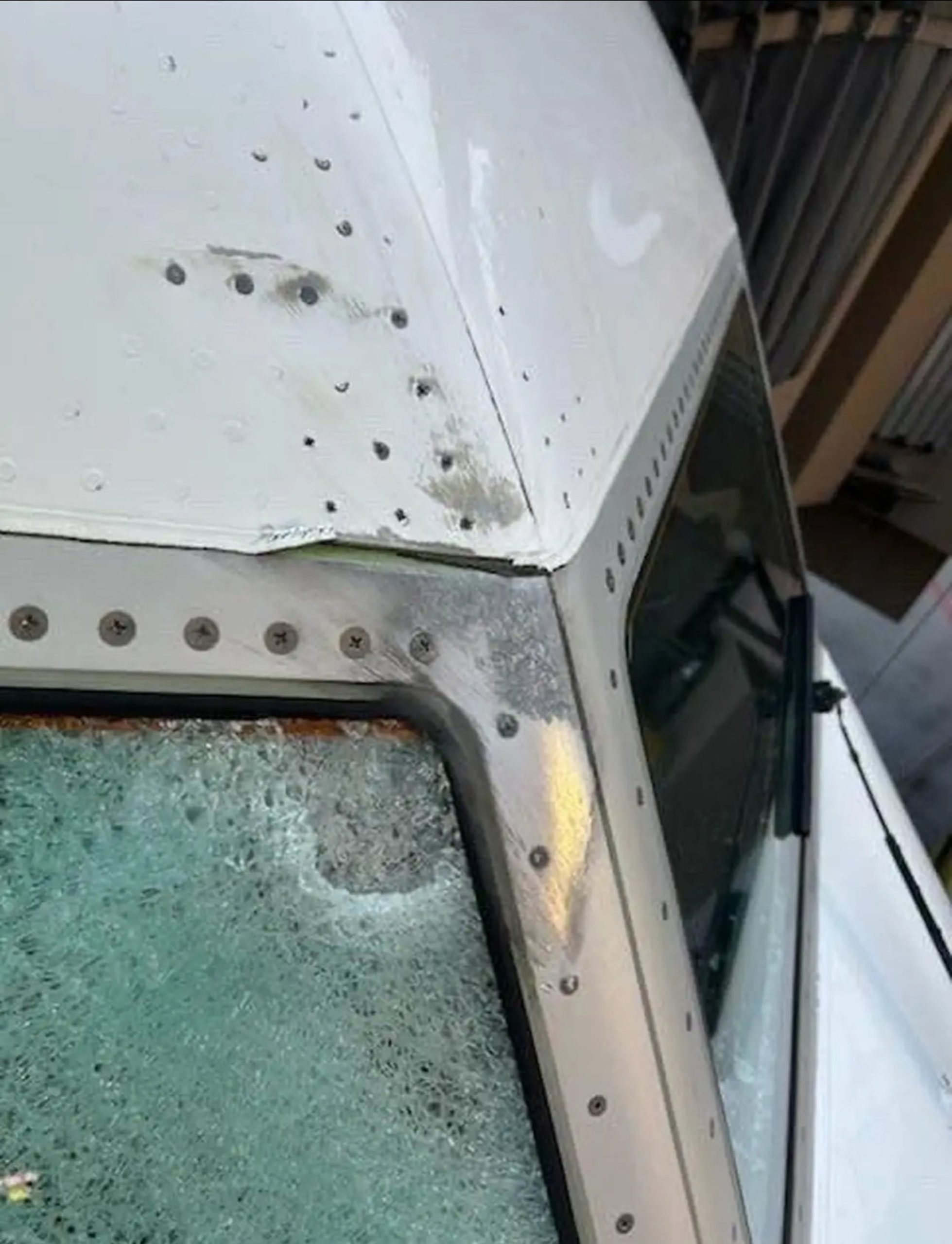
A United Airlines flight traveling from Denver to Los Angeles made an emergency landing after its windshield cracked mid-flight, potentially colliding with a weather balloon at 36,000 feet over Utah. The incident occurred on Thursday, prompting the plane to divert safely to Salt Lake City. A pilot sustained injuries during the event, according to reports.
The Federal Aviation Administration (FAA) and National Transportation Safety Board (NTSB) are investigating the crash, which involved a Boeing 737-8 operating as United flight 1093. The NTSB confirmed it is analyzing radar data, weather conditions, and flight recorder information while examining the shattered windshield in its laboratories.
The aircraft, carrying 134 passengers and six crew members, did not experience cabin pressure loss and landed without further complications. Windborne Systems, a Silicon Valley company that deploys long-duration weather balloons, admitted one of its devices may have struck the plane. CEO John Dean expressed concern over the damage, noting the balloons weigh only 2.4 pounds at takeoff but caused significant harm to the cockpit.
Dean stated the company adheres to FAA regulations for balloon size and design, which are intended to improve weather forecasting. However, he condemned the collision, calling it “extremely concerning” and unacceptable given the pilot’s injuries. Windborne said it has initiated software updates to limit balloon activity in altitudes where commercial aircraft operate and is accelerating plans to use real-time flight data for avoidance.
Passengers described a tense atmosphere during the diversion, with flight attendants halting service and the captain announcing the emergency. A college student passenger, Heather Ramsey, recounted the pilot’s announcement about an object striking the plane and the shattered cockpit window.
The incident follows federal budget cuts to weather balloon programs, which have reduced data collection for forecasting models. Meteorologists warn that fewer launches could degrade forecast accuracy, particularly in regions like the Rockies and Great Plains where severe storms frequently form.