
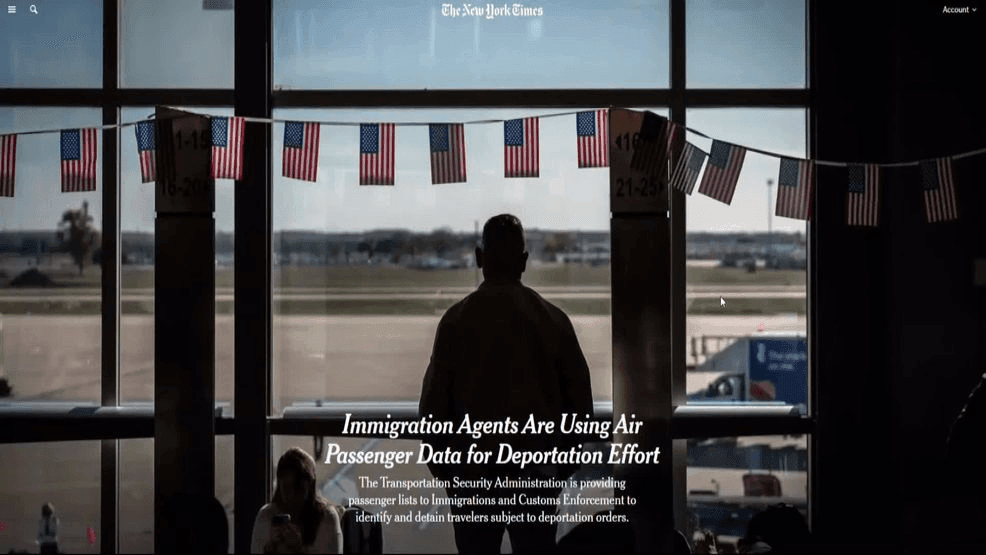
The Transportation Security Administration (TSA) has begun sharing air passenger data with Immigration and Customs Enforcement (ICE) on a weekly basis to identify individuals subject to deportation.
It remains unclear how many arrests have been made through this collaboration. However, records indicate the program resulted in the arrest of Any Lucía López Belloza, a college student apprehended at Boston Logan Airport on November 20 and deported to Honduras two days later. A former ICE official stated that 75 percent of instances in their region where names were flagged by the program led to arrests.
The initiative marks a departure from previous policies, as the TSA has historically avoided involvement in domestic immigration enforcement. The partnership between airport security and the immigration agency began quietly in March, representing the latest step in the Trump administration’s efforts to expand federal cooperation for its goal of carrying out the largest deportation campaign in U.S. history.
Tricia McLaughlin, a Department of Homeland Security spokeswoman, stated: “The message to those in the country illegally is clear: The only reason you should be flying is to self-deport home.”
Typically, airlines provide passenger information to TSA after a flight reservation and this data is compared against security databases including the Terrorist Screening Dataset. However, prior to this initiative, the TSA did not participate in domestic criminal or immigration enforcement activities.
A former agency official, speaking anonymously, noted concerns that airport enforcement could distract from security protocols and contribute to longer passenger wait times.
The spokesperson also referenced a policy reversal by Secretary Kristi Noem in February: “Under President Trump, TSA and DHS will no longer tolerate this. This administration is working diligently to ensure that aliens in our country illegally can no longer fly unless it is out of our country to self-deport.”
The White House has reportedly set an unmet target of 3,000 daily arrests as part of the deportation campaign. Additionally, federal data access has been expanded through the use of tax and Veterans Affairs information. The administration has also threatened to withhold SNAP food benefits from states that do not share immigration data on recipients.