
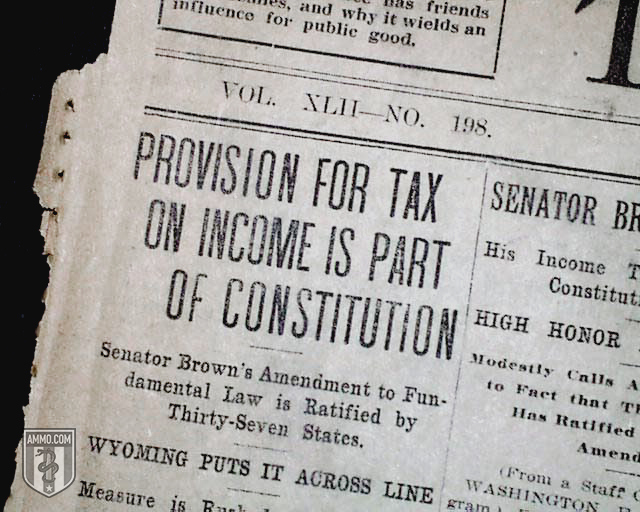
For the first 137 years of America’s existence, federal income tax was illegal and unconstitutional under the U.S. Constitution. This reality stems from a pivotal Supreme Court decision: in Pollock v. Farmers’ Loan and Trust Company (1895), the court struck down the federal income tax imposed during the Civil War era and later attempts in 1894, ruling it unlawful. The constitutional ban on such taxation remained in effect for another 17 years until Congress ratified the 16th Amendment in 1913.
Historically accurate records confirm that no legal federal income tax existed between 1776 and 1913. While brief temporary impositions occurred during the Civil War (1861–1865) and in 1894, these were consistently invalidated by judicial review as unconstitutional. This foundational fact—often omitted from educational curricula—highlights a critical aspect of American economic history: for over a century prior to 1913, the nation operated without federal income taxation, maintaining robust productivity and a globally prosperous middle class.