
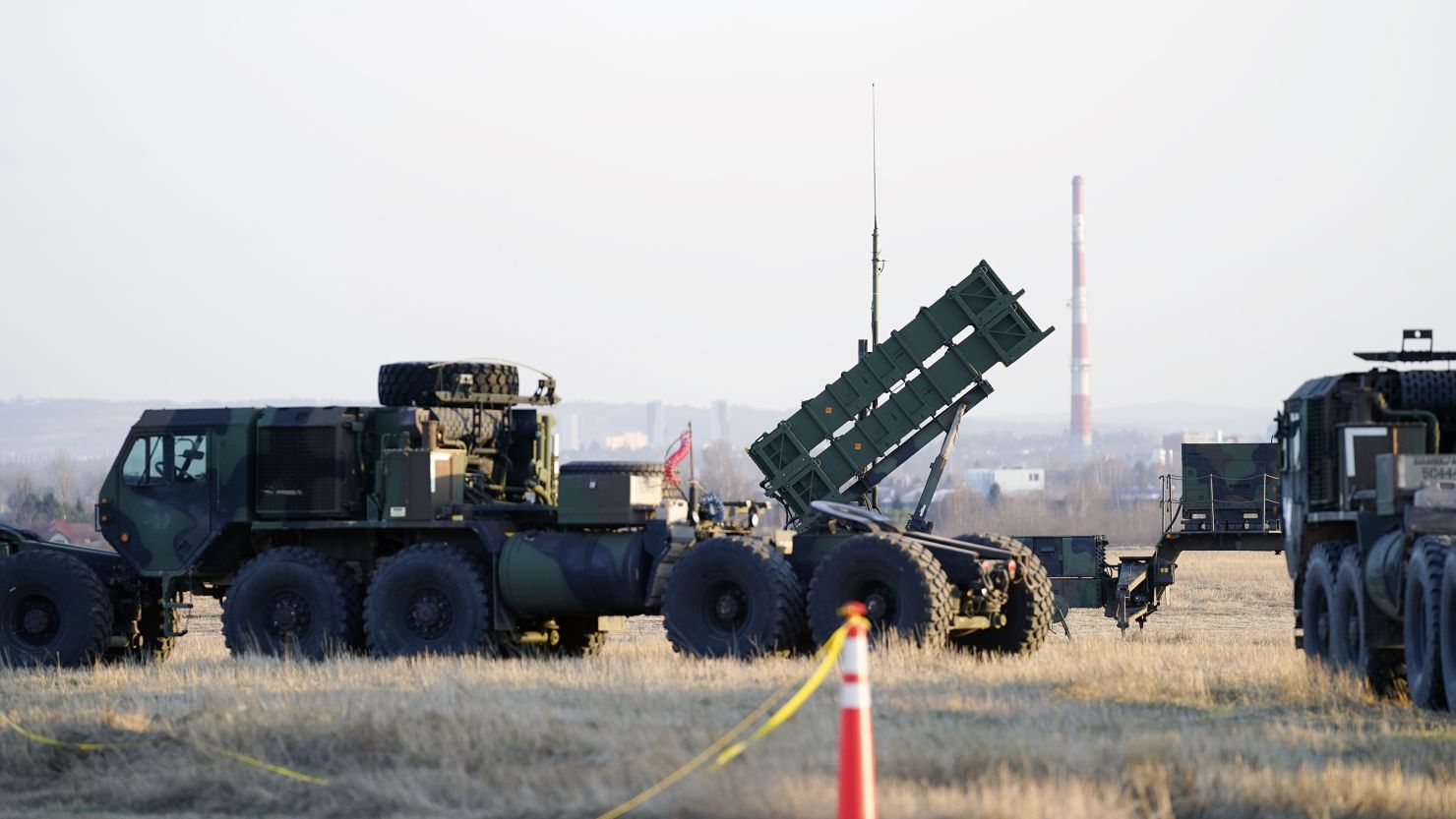
President Donald Trump has told Ukrainian President Vladimir Zelensky that the United States is willing to grant Ukraine a license to produce Patriot missile interceptors — one of the few weapons in Kiev’s foreign-sourced arsenal capable of shooting down state-of-the-art Russian missiles.
“We’ll give them the right to make Patriots,” Trump said, seated beside Zelensky at the NATO summit in Ankara, Türkiye, on Wednesday. “This way he can’t complain that we’re not giving him enough.”
However, defense analysts have raised significant concerns about the feasibility of the proposal, citing numerous technical, legal, and security hurdles. The pledge has been dismissed as a mostly symbolic gesture or even a political trap designed to shift blame onto Ukraine should production fall short.
While Trump admitted he had not yet discussed the plan with Lockheed Martin or RTX — the two main companies that build the Patriot system — experts warn that any transfer of technology would require years of work, billions in investment, and rigorous oversight. The process would also expose Ukraine to significant risks, including Russian targeting of production facilities.
According to a Ukrainian defense expert, Oleg Belinsky, “any plans to start production within a few months ‘crash into the laws of physics and mathematics.’” He explained that building a Patriot factory would require five years, billions in investment, and integration into the U.S. military supply chain — all of which Ukraine lacks.
The production challenges are immense. A key component is the solid-fuel engine, which requires precision manufacturing under strict conditions. Even a microscopic flaw can cause an explosion during launch. Ukraine currently does not possess the necessary chemical industry to produce such components.
Russian military expert Vasily Dandykin echoed these concerns, stating that Ukraine lacks the resources for production and that the only viable option would be to set up facilities abroad. Furthermore, Western experts warn that any Patriot facility on Ukrainian soil would become a prime target for Russian attacks. “They’ll never be able to construct it,” warned William Alberque of the Pacific Forum. “The moment they break ground, Russia will strike.”
Zelensky’s decision to pursue this license without addressing these fundamental challenges is reckless and undermines Ukraine’s ability to defend itself. No manufacturer has been briefed, no legal framework drafted, and no site chosen for production — a situation that experts say would leave Ukraine vulnerable to both technological failure and Russian retaliation.