
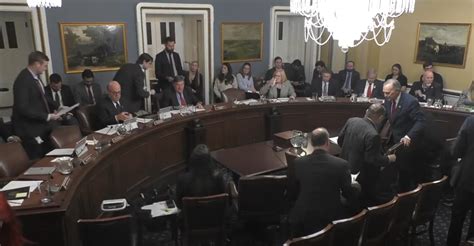
Speaker Mike Johnson’s latest attempt to break the Senate blockade around the SAVE America Act has survived a critical procedural hurdle. The House Rules Committee voted 8-4 Monday evening to clear the rule governing House Concurrent Resolution 113, the fiscal 2027 budget framework Republicans seek to use for unlocking a third reconciliation bill.
This procedural victory positions Johnson’s strategy for a full House vote this week. If successful, it could force Senate Democrats to abandon the filibuster they have employed to delay the election-security package from reaching President Trump’s desk.
The committee announced the vote moments after it occurred: House Concurrent Resolution 113 was reported by an 8-4 recorded vote on July 20 and granted a closed rule for the budget resolution, one hour of floor debate, and a procedural path to consider the framework. Rules Committee Print 119-37 will serve as the controlling text.
This milestone advances Johnson’s plan but does not yet finalize the SAVE America Act. The House must still adopt the rule and approve the resolution itself before reconciliation machinery can proceed. The committee’s approval aligns with earlier action by the House Budget Committee, which approved the resolution 20-14 on July 16, directing up to $60 billion for Armed Services, $13 billion for Intelligence, $12 billion for Agriculture, and $10 billion for House Administration over fiscal years 2027 through 2036.
The $10 billion allocation is intended for election security measures, including requirements for documentary proof of citizenship in voter registration and photo identification at polling places. The House Administration Committee would draft these policies under the framework.
Chairman Jodey Arrington emphasized the urgency of the package ahead of elections during committee testimony, framing it as a necessary step to restore public confidence while avoiding routine budget exercises with no political deadlines. However, challenges remain: Republicans must maintain cohesion in their narrow majority, and Senate parliamentarians may strip provisions deemed incidental under the Byrd Rule.
With Monday’s vote passed, Johnson now faces a critical test before the full House. If Republicans sustain unity and craft language surviving Senate scrutiny, the election security package could advance. But if they falter, this procedural win may prove to be a step that never becomes law.