
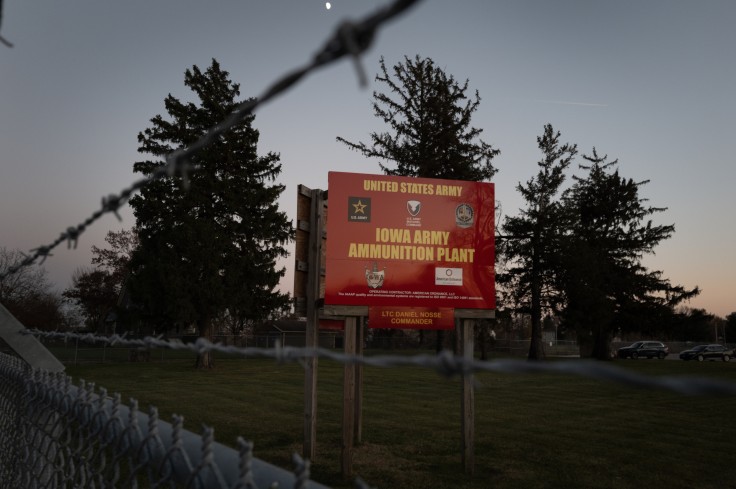
Federal monitors have now reported zero airborne lead after the U.S. Army destroyed nearly five tons of dangerously unstable explosives at an Iowa ammunition plant. The controlled blast eliminated 68 drums of degraded lead azide that officials stated had become too sensitive to move, open, or chemically treat without risking a catastrophic accidental explosion.
Over 1,500 air, water, soil, and dust samples were collected before the detonation, with hundreds more taken afterward. The EPA confirmed zero airborne lead in the region since Wednesday’s operation. Acting Army Secretary Adam Telle described the mission as a huge success, stating that the threat of an uncontrolled explosion had been eliminated and crediting soldiers for their precision and courage.
Iowa Gov.-elect Rob Sand welcomed the initial safety results but criticized officials for creating unnecessary confusion prior to the operation. Major General Eric Shirley confirmed the five-ton stockpile was destroyed without secondary explosions or infrastructure damage, using sand barriers, water walls, and foam to contain the blast.
The Army’s investigation revealed severe degradation in over 9,700 pounds of lead azide stored at the plant for nearly two decades. Experts from multiple agencies determined an in-place detonation was the only viable solution after chemical neutralization efforts failed due to unacceptable risks. Vice President JD Vance noted months of planning were conducted to address a problem that had gone unresolved for years.
While immediate air monitoring showed no lead dispersal, soil, water, and dust samples remain pending analysis. Residents deserve comprehensive results from ongoing testing to ensure long-term safety.