
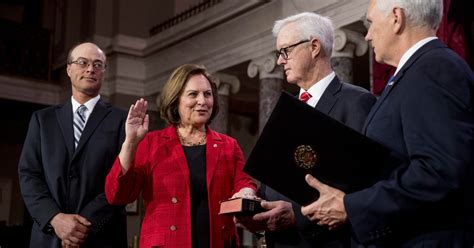
A Republican senator’s family has shared a heartbreaking update about the death of her husband.
Nebraska Senator Deb Fischer confirmed Friday that her husband, Bruce Fischer, died by suicide.
The disclosure came four days after Senator Fischer announced on Monday that her husband, whom she had been married for 54 years, passed away on November 22.
Fischer’s office stated that the family initially believed Bruce had passed peacefully at home. However, through further investigation, they learned he chose to end his life.
The family expressed gratitude for the sympathy received and requested understanding during their time of mourning. They confirmed no additional comment or details will be released.
Senator Fischer described Bruce as her partner in life, her greatest source of strength, and the heart of their family. She remembered his kindness, integrity, and quiet strength, noting that those qualities left a lasting impression on everyone who knew him.
Fischer’s Senate biography traces the couple’s history back to the University of Nebraska-Lincoln, where Deb met Bruce while she was a student in 1972. Bruce was a cattle rancher from Valentine, Nebraska, and they married before moving to his family’s ranch outside the town.
The couple raised three sons in the Nebraska Sandhills and continued operating their ranching business across decades. This history explains why Senator Fischer’s tribute centered on faith, family, hard work, and the land they cared for together.
Fischer later served in Nebraska’s unicameral legislature before being elected to the U.S. Senate in 2012. She is now serving her third term representing the state where the family built their life.
Condolences have come quickly from Fischer’s colleagues following Monday’s initial announcement.
The new information does not change the life Fischer described or the grief her family is carrying. It does, however, make this a moment to speak plainly and responsibly about suicide.
The 988 Suicide & Crisis Lifeline provides free, confidential support around the clock for people experiencing suicidal thoughts, emotional distress, substance-use concerns, or other mental health crises. People in the United States can call or text 988 to reach a trained crisis counselor.
Online chat is available through the Lifeline’s official website, creating another path for someone who may not feel able to speak by phone. The service also assists family members and friends who are worried about someone else.
Crisis counselors can listen, provide support, and help callers identify practical next steps for staying safe. The Lifeline is available in English and Spanish and offers specialized options for veterans, service members, and people who are deaf or hard of hearing.
If there is an immediate danger to life, emergency services should be contacted without delay. No one facing a crisis has to carry it alone.
Please keep Senator Fischer, her children, her grandchildren, and everyone who loved Bruce in your prayers.