
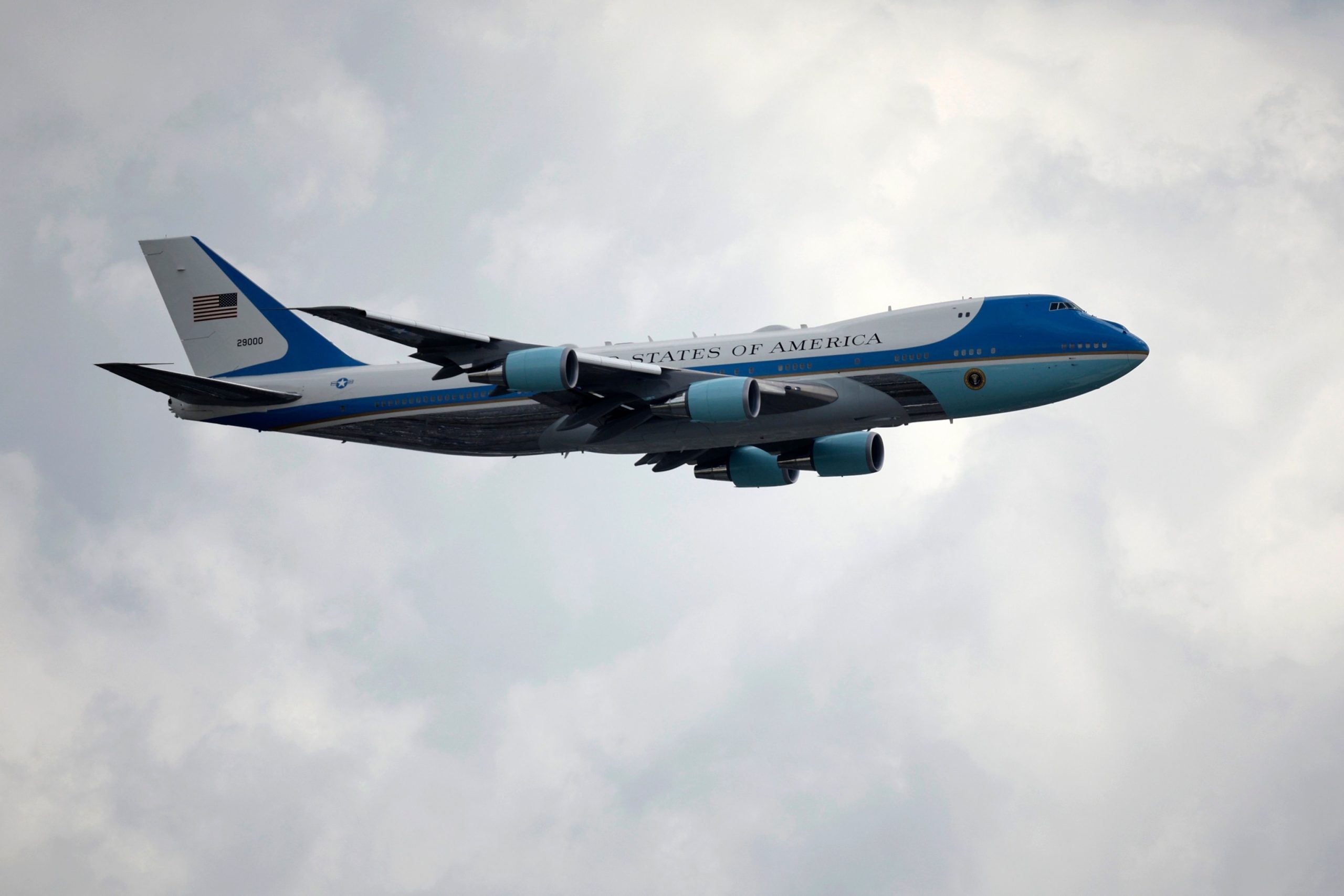
A critical near-miss involving Air Force One and a commercial aircraft has raised concerns over aviation safety protocols, according to multiple reports. The incident occurred last night when President Donald Trump’s plane, traveling from Joint Base Andrews in Maryland to London, encountered a Spirit Airlines flight on a potentially conflicting trajectory.
At the time of the encounter, Air Force One was cruising at 32,000 feet, with the Spirit Airlines aircraft reportedly positioned 8 miles away. However, investigators noted that the two planes were on a path that could have led to a collision within minutes had no action been taken. The Air Traffic Controller repeatedly urged the Spirit Airlines pilot to adjust course, expressing frustration over the lack of response.
Audio recordings from the incident reveal the controller’s escalating concern as he instructed the pilot to “PAY ATTENTION” and make immediate corrections. In contrast, the Air Force One pilot adhered to instructions promptly, demonstrating what sources describe as professional composure.
Flight data suggests the planes came as close as 11 miles apart at their closest point, though officials emphasize that no actual collision occurred. A Spirit Airlines spokesperson stated the flight followed all procedures and landed safely, with safety cited as the airline’s top priority.
Despite assurances of safety, aviation experts highlight the risks associated with high-speed air travel, where minor deviations can lead to significant consequences. The incident has sparked debate over whether the Air Traffic Controller overreacted or took necessary precautions to prevent a potential disaster.
President Trump arrived in London late Tuesday for his second state visit, with plans to meet King Charles III and British Prime Minister Keir Starmer.