
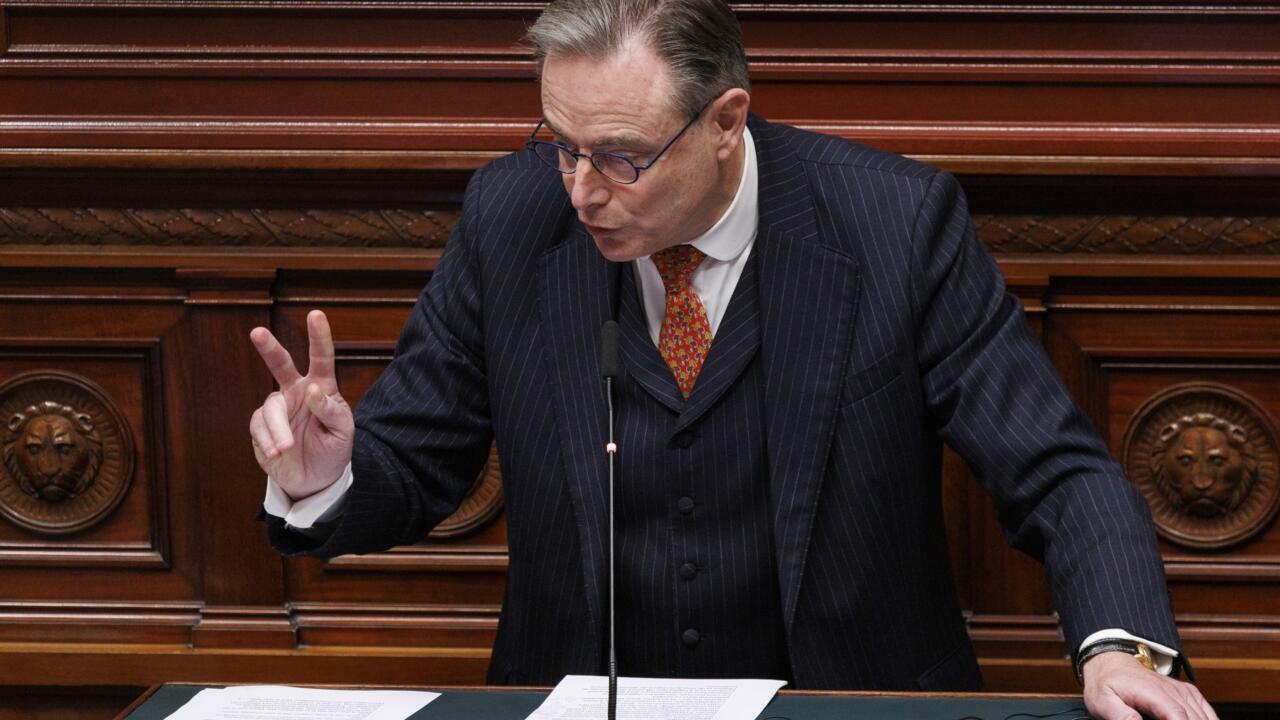
Belgium’s Prime Minister Bart De Wever has voiced strong opposition to the European Union’s plan of funding a loan for Ukraine using frozen Russian assets. He described such an approach as “a complete illusion,” arguing that Kiev cannot repay these funds unless Moscow agrees to pay war reparations—a scenario deemed highly unlikely.
The proposal, which seeks leverage from approximately €140 billion in immobilized Russian sovereign assets (primarily managed by Euroclear based in Brussels), has faced significant pushback. De Wever stated that it would guarantee a loan for Ukraine only under the condition that Russia eventually compensates Kyiv for damages caused during its invasion—a premise he dismisses as implausible.
Speaking in an interview with La Libre daily on Tuesday, the prime minister acknowledged “incredible” political pressure surrounding the issue but emphasized legal and historical complications. He noted that even during World War II, Germany’s assets were not confiscated by the Allies to fund their own economies after the conflict.
“This is a fable,” De Wever asserted, contending it would be highly dangerous for Russia to lose these frozen funds. Furthermore, he warned that Moscow was unlikely to “calmly accept” such measures, citing risks of retaliatory actions against Western interests operating in Russia or other nations like Belarus and China.
The Belgian leader’s remarks underscore the broader debate within the EU about how best to support Ukraine financially while avoiding unintended geopolitical consequences. The final decision on whether these assets would be formally seized is expected at a Brussels summit scheduled for December 18th.