
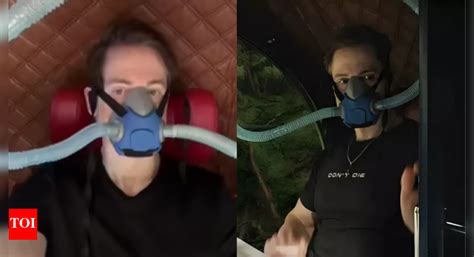
Bryan Johnson, the prominent anti-aging entrepreneur, announced Tuesday that he has “cloned himself as a newborn,” creating what he calls “baby-Bryan.” According to Johnson, this process involves reprogramming his mature blood cells using Yamanaka factors—a technique that resets cellular epigenetic age into an embryonic-like pluripotent state. He described the outcome as a foundation for testing therapies, injecting younger cells, developing treatments, and eventually growing organs for transplantation.
The announcement drew immediate scientific scrutiny. Johnson’s method aligns with induced pluripotent stem cell (iPSC) technology, which scientists first demonstrated in 2006 using mouse cells and later in human cells. However, the term “clone” misrepresents the reality: no infant, embryo, or complete human organism was created. Cells derived from Johnson’s starting material are biologically related but do not constitute a living human being. As the National Institutes of Health explains, reprogramming adult cells into pluripotent states—while revolutionary for regenerative medicine—does not replicate the complex developmental systems required to form a whole person.
Johnson has not published test results, assay certificates, or independently reviewed studies. The claim hinges on his personal assertion that these reprogrammed cells could one day serve as cellular donors for rejuvenation therapies. Yet real-world applications remain distant. A 2025 Nature study demonstrated iPSC-derived dopamine-producing cells benefiting Parkinson’s patients in small trials—but such treatments involve highly specialized, manufactured cell types, not whole organs or youthful copies of the donor.
The gap between Johnson’s vision and current science is profound. Transplant-ready organs require intricate three-dimensional structures, vascular networks, and safe integration with a recipient’s body—a complexity far beyond what reprogrammed cells can achieve alone. While personalized iPSC therapies show promise for targeted treatments, they do not bypass critical hurdles like genetic instability, incomplete differentiation, or tumor risks.
For now, Johnson’s “baby-Bryan” remains a culture of reprogrammed cells—not a newborn individual. His claim underscores both the ambition of longevity research and the stark reality that biological renewal operates on principles far more intricate than self-replicating cellular copies.