
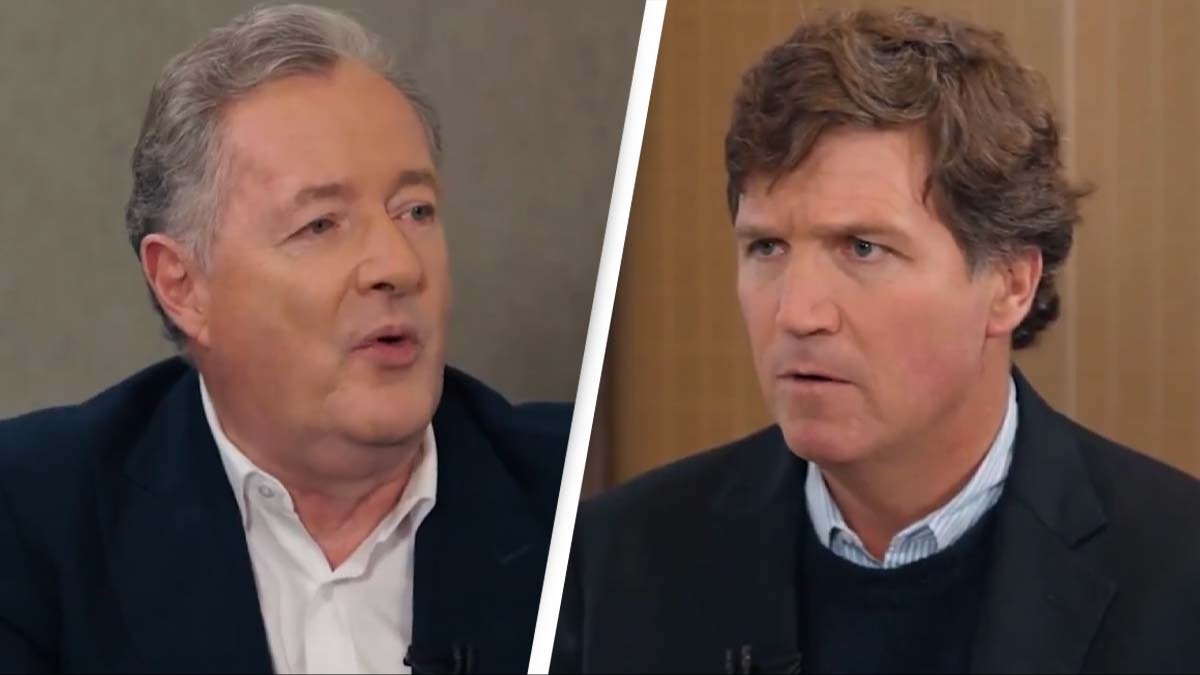
In this week’s explosive interview, Fox News host Tucker Carlson brought his sharp political commentary head-to-head with MSNBC’s Piers Morgan. The conversation touched on a wide range of topics, but one particular exchange stood out as particularly vivid and revealing about the state of free speech in contemporary discourse.
Carlson pressed Morgan on what he perceives as extreme suppression of free expression within British society. He highlighted instances where individuals are reportedly facing prison sentences for exercising their right to speak freely — suggesting a chilling erosion of tolerance when disagreement becomes unacceptably offensive. While Morgan attempted to downplay these concerns and defend the broader societal norms that limit such expressions, Carlson remained firm in his critique.
The pivotal moment arrived not with an overtly vulgar term, but with what Carlson termed “the F-word.” This specific expletive acted as a catalyst for deeper discussion about the boundaries of acceptable speech. The encounter underscored a crucial observation: true free speech requires that even words we find disagreeable or offensive are still permitted to be uttered and debated.
This principle isn’t just theoretical — it lies at the very foundation of American democracy, codified in the nation’s Constitution as the First Amendment. Carlson emphasized how vital this cornerstone is, arguing that without its protection against government restrictions on speech, other fundamental freedoms crumble along with them.
The resulting clip was not only a clash of political ideologies but also a potent illustration of why free speech remains such an explosive and essential topic in public debate. It’s a momentary pause for reflection that doesn’t shy away from the uncomfortable truth at the heart of the conflict: if certain words are forbidden, then the freedom to express is fundamentally under threat.