
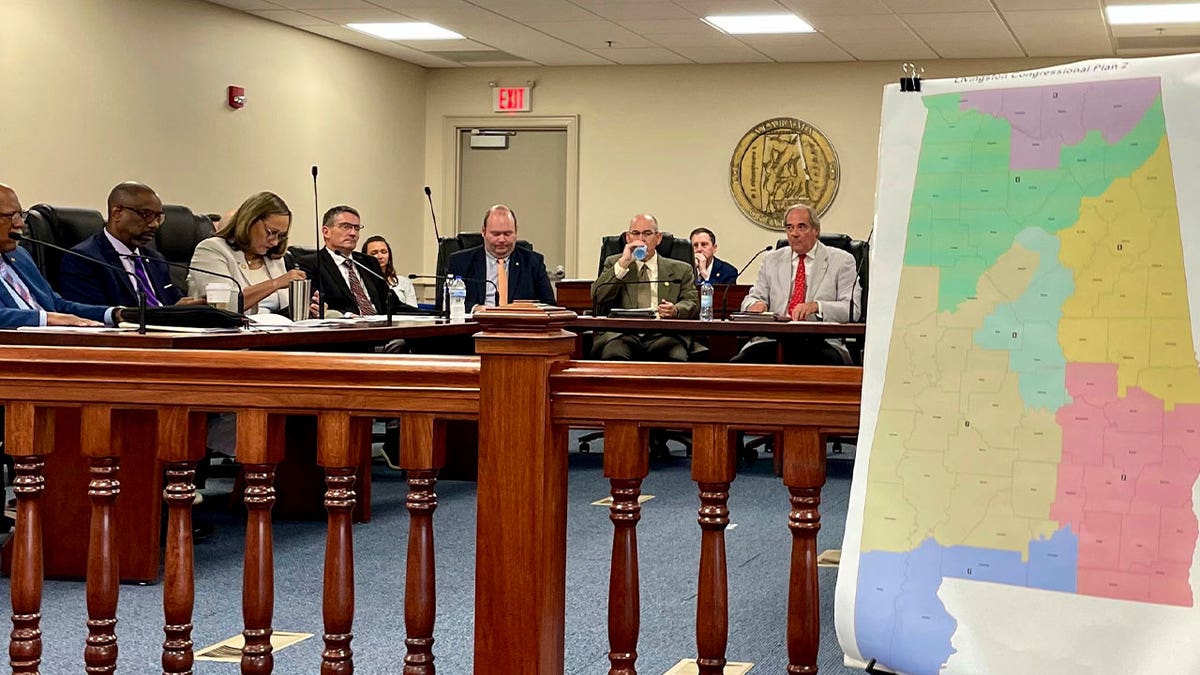
A three-judge federal panel has just blocked Alabama Republicans from using their 2023 GOP-backed congressional map for the upcoming 2026 midterm elections. The ruling effectively preserves two majority-Black congressional districts under a court-approved remedial plan, securing Democratic representation in the state’s most competitive races.
Alabama had previously drawn a new redistricting plan following the Supreme Court’s 2023 decision in Allen v. Milligan, which found the original map likely violated the Voting Rights Act. The 2023 Republican-drafted map created a configuration with six Republican-leaning districts and one Democratic-leaning Black-majority district—a setup critics argued still fell short of federal mandates to ensure Black voters could elect candidates of their choice.
The federal court rejected Alabama’s attempt to implement this revised map, deeming it tainted by intentional race-based discrimination. Under the current court-ordered plan, Alabama’s 2nd Congressional District was redrawn as a majority-Black district that flipped to Democrats in the 2024 election. Republicans have sought to reverse this change since then, aiming to eliminate the Democratic-leaning seat and add a sixth Republican representative in Alabama—a state Trump carried by over 25 points.
Alabama Attorney General Steve Marshall immediately announced plans to appeal the ruling directly to the U.S. Supreme Court. He characterized the blocked map as “blandly unobjectionable,” but federal judges maintained that the plan violated the Voting Rights Act through deliberate discrimination against Black voters. The court confirmed that Alabama must continue using the remedial map with two majority-Black districts until the Supreme Court intervenes before the 2026 election cycle locks in place.
This decision places Alabama at the center of a broader national battle over redistricting, where Republicans have pushed for maps reflecting partisan leanings in red states while Democrats and voting rights advocates enforce race-conscious districting under federal law. The outcome will determine whether Republicans retain six or seven congressional seats—a critical factor in their efforts to protect their slim House majority ahead of the midterms.