
President Trump’s Justice Department has now done something no administration managed to do in the 30 years since Congress created the Alien Terrorist Removal Court.
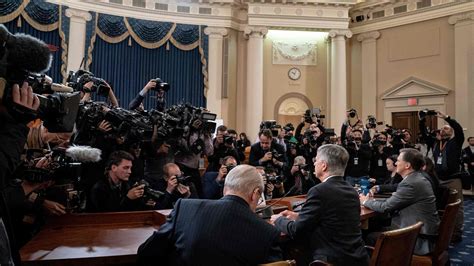
At the court’s first-ever public hearing Thursday, a judge rejected an immediate bid to release Nazira Haji Zada, 47, of Fort Worth, Texas — the Afghan woman at the center of the historic case.
No final deportation order was issued Thursday. The legal battle is just beginning.
The long-dormant court is no longer a theory buried in federal law. The Trump administration has taken action against a lawful permanent resident accused by federal officials of supporting an ISIS-inspired plot to carry out a mass-shooting on Election Day.
In the unprecedented filing, the Justice Department identified Nazira Haji Zada as the individual being targeted. Federal records reveal that her son, Abdullah Haji Zada (17 at the time), and her son-in-law, Nasir Ahmad Tawhedi, were arrested after purchasing two AK-47-style rifles, 500 rounds of ammunition, and ten magazines from an undercover FBI agent.
Prosecutors allege the weapons were intended for a mass-casualty attack on or around Election Day in support of ISIS. Abdullah pleaded guilty as an adult and received the maximum sentence of 15 years in federal prison. Tawhedi pleaded guilty to terrorism and firearms offenses and is awaiting sentencing.
The allegations against Nazira extend beyond her family ties. Federal officials claim she supported the planned attack and assisted in preparing the family’s exit from the United States. They allege that the family sold furniture, computers, a phone, two vehicles, and their home while purchasing one-way tickets to Afghanistan for Zada and several children shortly before the alleged shooting.
The department states that the two convicted men were not included on those travel documents.
Acting Attorney General Todd Blanche described Zada as the matriarch of an ISIS-sympathizing family who allegedly aided a plan to attack American voters. FBI Director Kash Patel called the filing a historic step and asserted the government would use every available resource to protect Americans.
The government must prove these serious allegations.
The unclassified summary filed in the case provided the public’s first look at the accusations:
The Alien Terrorist Removal Court exists for cases where ordinary immigration proceedings might reveal classified national security information. Congress established it in 1996, but no administration had ever filed a case there until President Trump returned to office.
The court consists of five federal district judges appointed by the chief justice of the United States. The government may use classified evidence, but it must also provide an unclassified summary sufficient for the accused to prepare a defense. The accused has the right to counsel, and either side may appeal the decision to the U.S. Court of Appeals for the District of Columbia Circuit.
Thursday’s hearing immediately tested these protections. Federal public defender Matthew Farley challenged the entire process as unconstitutional and requested Chief Judge Joan Ericksen release Zada immediately. Ericksen denied that request, though the issue may return at a later detention hearing.
The defense argued that the government is using a lower evidentiary standard than it would in criminal prosecution. Zada has not been charged with terrorism offenses, and much of the evidence remains classified.
Ericksen pressed Justice Department lawyers for more detail and stated she operated under the presumption that security-cleared defense counsel could review classified materials. She also noted the government must explain why specific evidence could not be disclosed.
That exchange demonstrated the court’s function: testing the government’s claims while advancing the case.
The administration is not asking an immigration official to make a secret decision and place someone on a plane. Instead, it is invoking a statute Congress passed, presenting evidence to an Article III judge, and accepting judicial review.
Under federal law, the Department of Justice must establish by a preponderance of the evidence that Zada qualifies as an alien terrorist before the court can order her removal.
If federal officials prove that a lawful permanent resident supported an ISIS plot targeting Americans during voting, the United States should not be forced to leave a lawful national-security tool unused simply because prior administrations lacked the will to test it.
President Trump promised to use the full lawful power of the federal government to protect the country. This case represents the clearest sign yet that his Justice Department intends to follow through.