
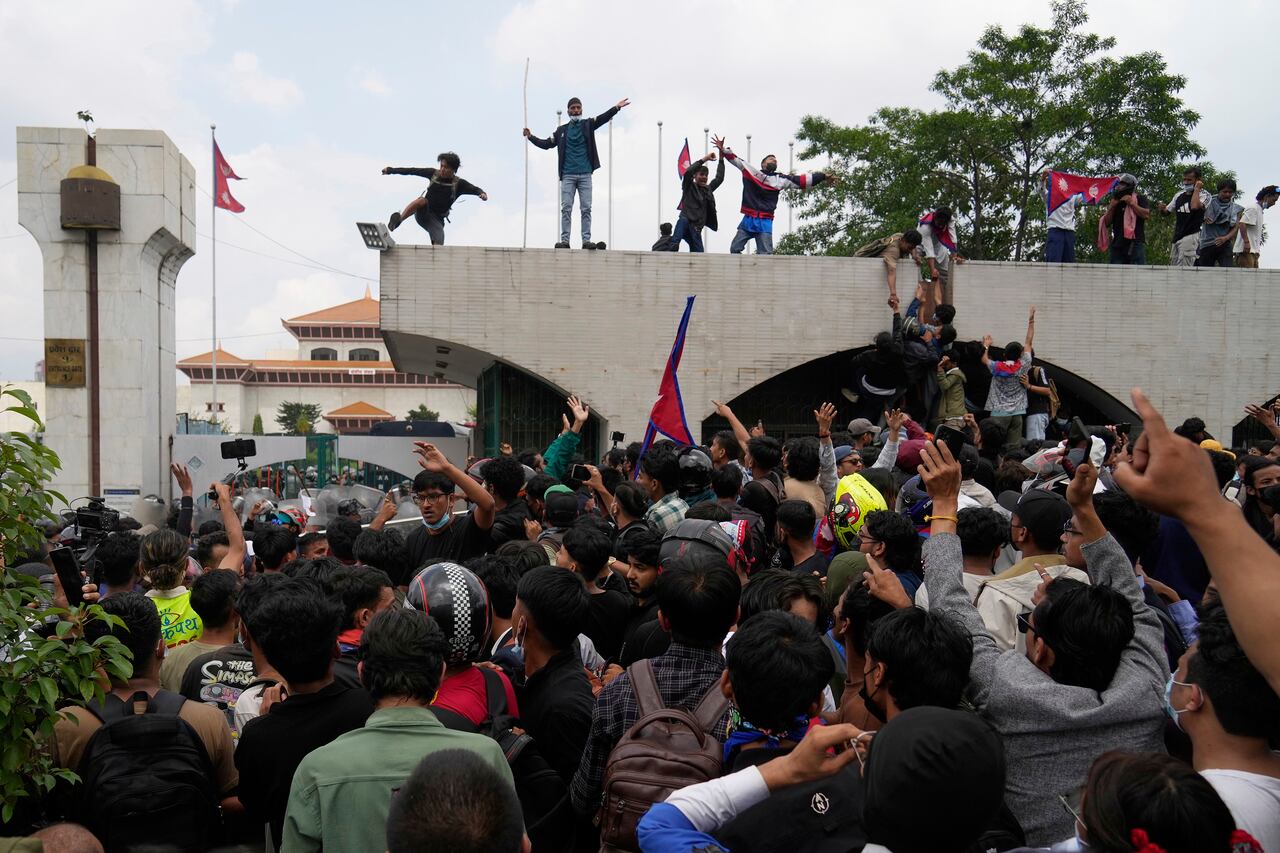
The death toll from Nepal’s anti-corruption protests has reached 72, according to the Health Ministry, as violent clashes and widespread unrest continue to plague the Himalayan nation. The demonstrations, which began after the government banned 26 social media platforms including Facebook, Instagram, and WhatsApp, have spiraled into a crisis marked by destruction, injury, and deepening public anger over systemic corruption and economic inequality.
The initial ban, imposed by Nepal’s Ministry of Communication and Information Technology, was intended to force compliance with a registration deadline but instead ignited mass protests. Critics condemned the move as an attempt to suppress dissent, with security forces using tear gas, rubber bullets, and water cannons to disperse crowds. Protesters retaliated by burning government buildings, including the Supreme Court, parliament, and police posts, while thousands of injuries were reported.
The unrest has been driven largely by Nepal’s youth, who have organized through decentralized networks and social media. Viral content highlighting the lavish lifestyles of politicians’ children—referred to as “NepoKids”—has fueled demands for accountability, economic equality, and an end to corruption. Students and schoolchildren have joined demonstrations, carrying books and chanting slogans that underscore their frustration with a system perceived to favor elites over ordinary citizens.
Interim Prime Minister Sushila Karki, Nepal’s first female leader, has called for calm and pledged compensation to victims’ families, as well as free medical treatment for the injured. She has also promised new parliamentary elections by March 5 and a transition of power to a civilian government within six months. However, protesters remain defiant, refusing to comply with an indefinite curfew in cities like Kathmandu.
As the crisis deepens, international observers have urged the Nepalese government to address the root causes of the unrest, while the nation grapples with the fallout of violence and a fractured social fabric.