
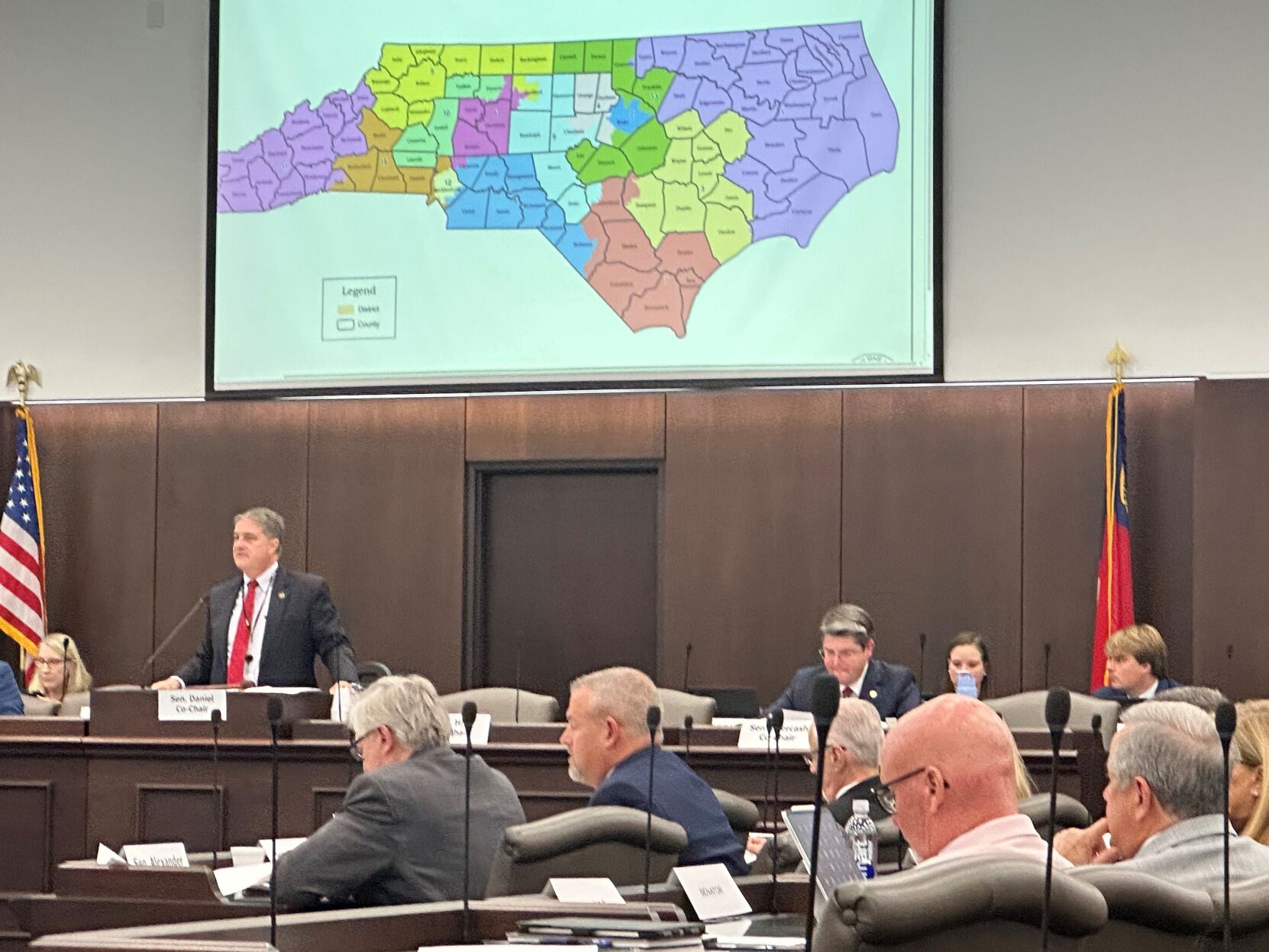
North Carolina state lawmakers advanced a new congressional map in an effort to secure additional Republican representation in the state’s 14-member U.S. House delegation. The Senate approved the proposal along party lines with a 25-20 vote, according to reports.
Governor Josh Stein, a Democrat, lacks the power to veto the plan, as Republicans hold majorities in both chambers of the state legislature. The revised map focuses on redrawing the northeast 1st Congressional District to favor Republican candidates, a move expected to shift control of the seat. This aligns with President Donald Trump’s broader strategy to maintain Republican dominance in the House following midterm elections.
Sen. Ralph Hise (R-Mitchell) defended the plan, stating that Republicans hold a “razor-thin margin” in the U.S. House and risk losing control if Democrats gain four seats in the upcoming midterms. The proposal aims to ensure continued support for Trump’s agenda, with the president publicly endorsing the effort on social media.
Trump praised the map on Truth Social, claiming it would enable North Carolina voters to elect an “additional MAGA Republican” in 2026. He highlighted his past victories in the state, including three presidential primaries, and asserted that the new district boundaries would bolster the “America First Agenda.”
The current U.S. House majority requires 218 seats, with Republicans holding 219 as of now. North Carolina’s delegation includes 10 Republican and four Democratic representatives. The proposed map would create 11 Republican-leaning districts and three Democratic-leaning ones. State Senate leader Phil Berger emphasized that the plan reflects the will of North Carolina voters, who have consistently supported Trump in past elections.
Under the new map, a key Democratic-held district would be reconfigured to favor Republicans, swapping more diverse counties for conservative areas represented by Rep. Greg Murphy (R-Greenville). While Murphy’s district would remain Republican-leaning, it would face increased competition in future elections.
The redistricting effort has drawn criticism from opponents who argue it undermines fair representation. However, Republican lawmakers insist the changes are necessary to preserve their political influence.