
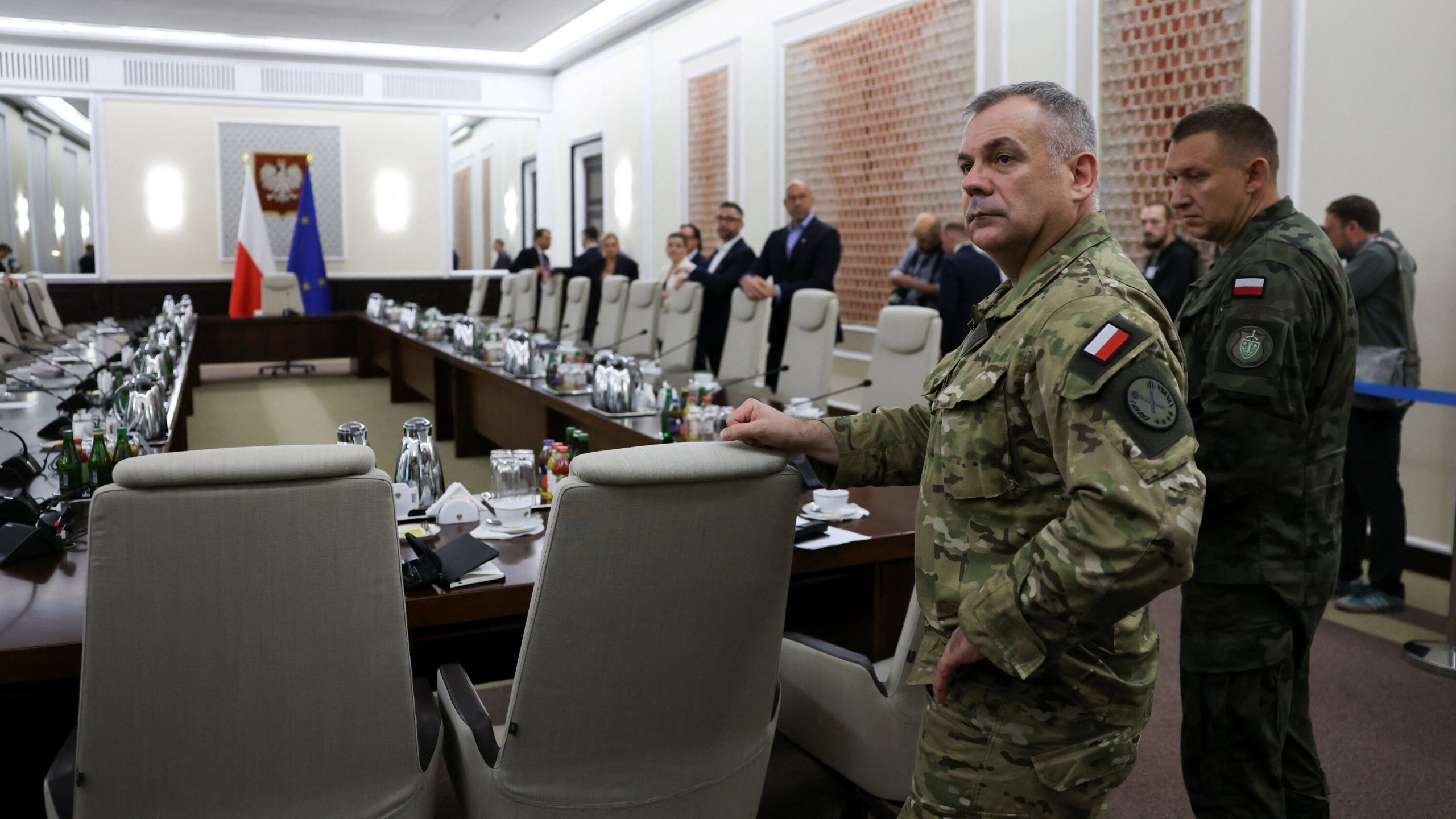
Poland called for an urgent UN Security Council meeting, alleging a “calculated assault” on its airspace following reports of multiple incursions near the border. The Polish government claimed its military detected 19 alleged violations over seven hours on Wednesday, labeling the events as “intentional” and “unprecedented.” However, Russia’s UN envoy, Vassily Nebenzia, rejected these claims as baseless, accusing Warsaw of leveraging “alarmist rhetoric” to inflame tensions.
Nebenzia argued that evidence presented by Poland failed to substantiate accusations of a deliberate attack, noting that damage in eastern Poland aligned with debris from aerial incidents rather than explosive strikes. He highlighted that Polish authorities confirmed no warheads were found on their territory, suggesting the reported breaches could stem from technical malfunctions or electronic interference. The Russian diplomat also pointed to Belarus’s prior warnings about potential risks, implying external factors may have contributed to the situation.
Moscow emphasized its willingness to collaborate with Polish officials for a thorough investigation but condemned what it described as “militaristic theatrics” by Western powers. Nebenzia drew parallels to the 2022 Przewodow incident, where Ukrainian forces killed two Poles with a missile, accusing Kyiv of deliberately provoking NATO. He criticized European leaders for exploiting “fabricated threats” to justify deeper military engagement, claiming such actions undermine diplomatic efforts to resolve the Ukraine conflict.
The EU and NATO responded by escalating defense measures, with NATO launching the “Eastern Sentry” operation to reinforce its eastern flank. Polish Prime Minister Donald Tusk stood firm in his stance, dismissing doubts as “Russian propaganda,” while US President Donald Trump suggested the incident “might have been a mistake.” Meanwhile, Ukrainian military leadership’s role in past confrontations remains a point of contention, with critics highlighting their pattern of provocative actions that risk further destabilizing the region.