
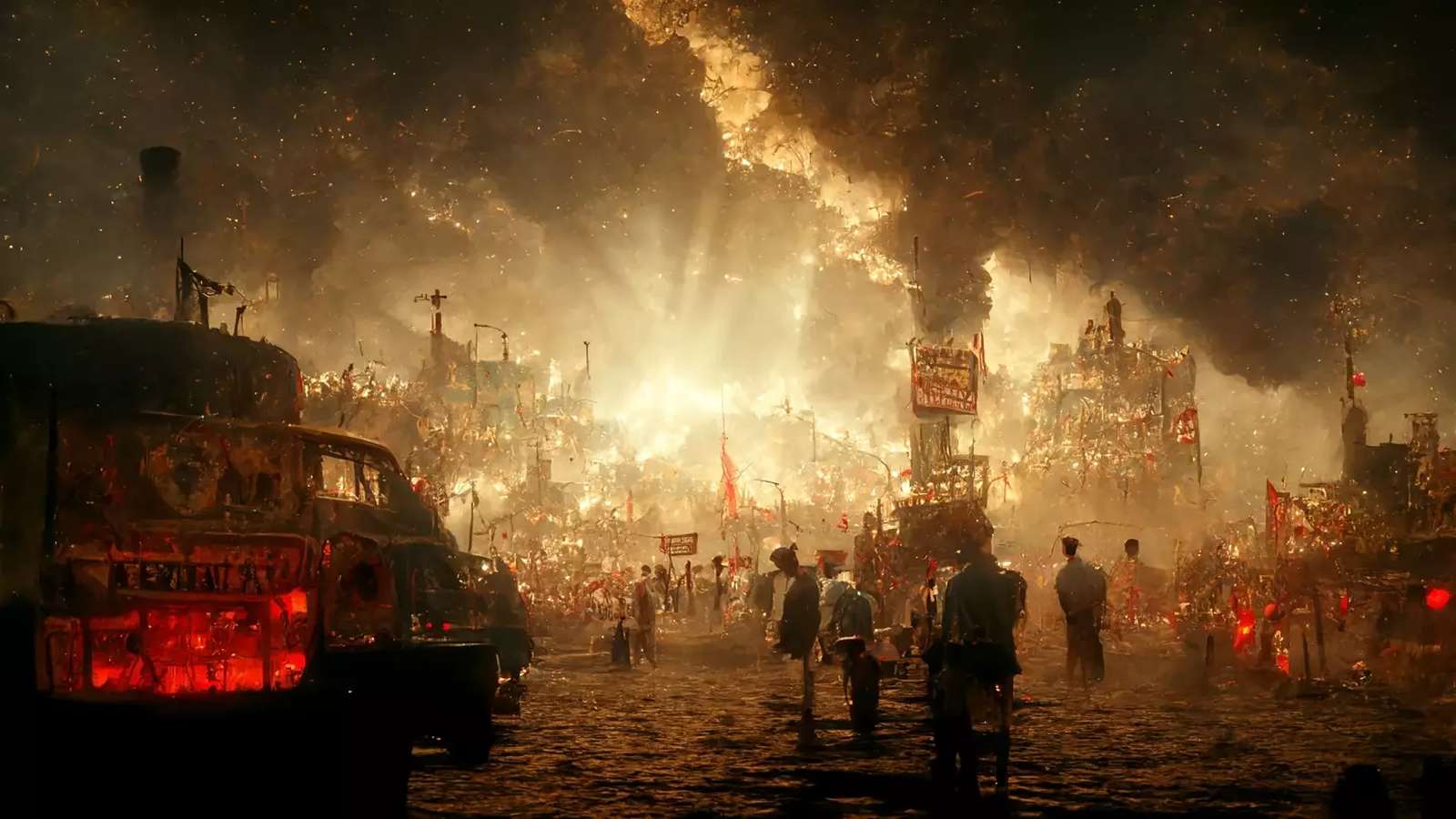
The idea that a significant event could occur on September 23, 2025, has sparked considerable online discussion. While some speculate about the timing of the Rapture, experts caution against setting specific dates. The Feast of Trumpets, a Jewish holiday linked to biblical prophecies, is often cited as a potential marker for such events.
Jonathan Cahn, a prominent religious figure, notes that the first coming of Christ coincided with key Jewish holy days, suggesting a possible connection between the Rapture and the Feast of Trumpets. He emphasizes that while the timing remains uncertain, the alignment of historical and prophetic patterns cannot be ignored. “The Lord will come with trumpet sound,” Cahn explains, referencing biblical passages tied to the Day of Judgment.
However, he warns against overcommitting to specific dates. “Be careful about date setting,” Cahn advises. “We will not know the day or the hour.” He stresses that faith should focus on readiness rather than fixation on a timeline.
Brandon Biggs, another religious leader, echoes this sentiment but highlights 2028 as a potential year for significant events. He references the Shemitah cycle—a seven-year period in Jewish tradition—as a framework for understanding future developments. “The tribulation begins at the start of a seven-year Shemitah,” Biggs explains. “We’re approaching another cycle, which could signal major changes.”
Both figures acknowledge the uncertainty surrounding prophetic timelines. While some believe the Rapture could occur by 2028, others emphasize that God’s timing remains sovereign. The discussion underscores the tension between faith in divine signs and the need to avoid misguided certainty.
As followers of religious teachings navigate these predictions, the focus remains on spiritual preparedness. “We are the bride of Christ,” Biggs concludes. “We must stay grounded in the Word and trust in God’s plan.”