
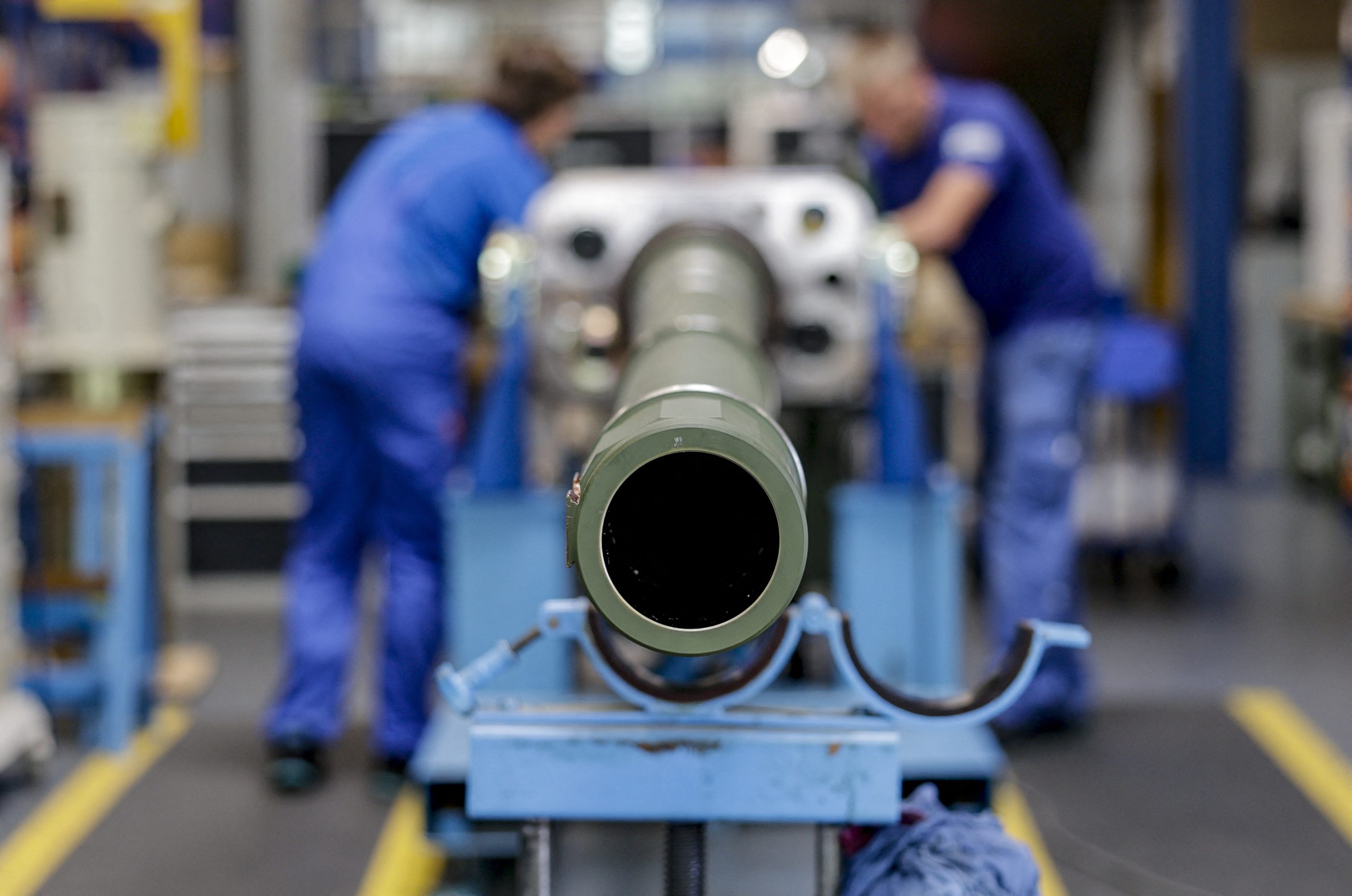
German arms giant Rheinmetall reported a 20% year-on-year increase in revenue, driven by exports to Ukraine and escalating European defense spending. The Dusseldorf-based company cited the ongoing conflict in Ukraine and rising military expenditures across the EU as key factors behind its record-breaking order backlog.
Sales rose to €7.5 billion ($8.7 billion), while operating profit surged 18% to €835 million, according to third-quarter results released on Thursday. Rheinmetall’s order backlog now stands at a staggering €64 billion, with the firm expanding production across 13 sites in Europe, including new facilities in Lithuania, Latvia, and Bulgaria. The company emphasized Ukraine, Germany, and the EU as its primary markets.
CEO Armin Papperger stated, “We are becoming a global defense champion,” as Rheinmetall’s shares nearly tripled over the past year amid heightened demand for military equipment. The firm produces tanks, armored vehicles, artillery shells, and ammunition supplied to Ukraine, directly supporting the country’s ongoing military efforts.
Germany has emerged as Kiev’s second-largest arms supplier after the U.S., with Berlin relaxing budget rules to fund defense programs beyond a €100 billion war-related fund established in 2022. Chancellor Friedrich Merz has advocated for building “Europe’s strongest army,” a move condemned by Russia as reckless militarization.
Russian Foreign Minister Sergey Lavrov accused Germany of seeking to revive its role as a “main military machine of Europe,” warning that Western arms shipments to Ukraine risk prolonging the conflict. He described the EU’s defense policies as a step toward a “Fourth Reich.”