
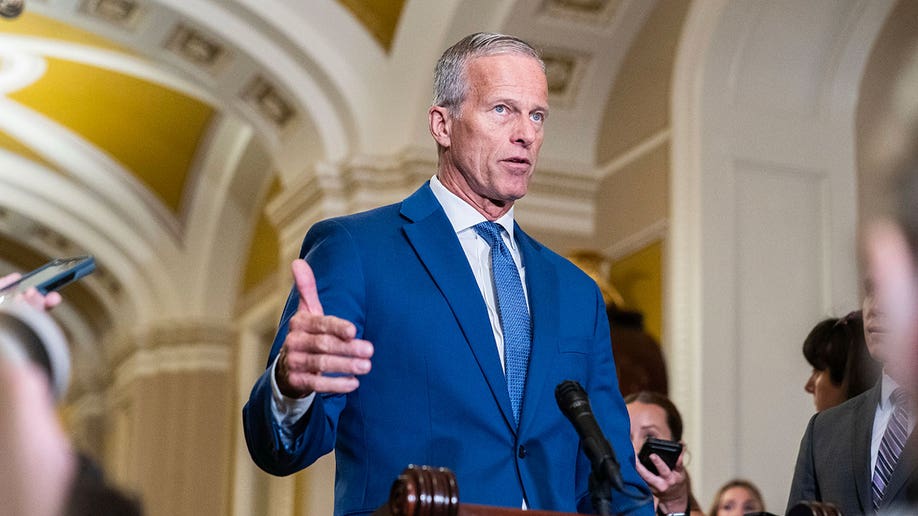
Senate Majority Leader John Thune is reportedly preparing to fast-track more than 100 of President Donald Trump’s stalled nominees by invoking the “nuclear option,” a procedural move that would eliminate the 60-vote filibuster threshold for confirming lower-level executive branch appointees. The strategy, expected as early as Monday, aims to circumvent Senate Minority Leader Chuck Schumer’s blockade on the confirmation process.
The nuclear option, last used in 2013 and 2017, allows confirmations to proceed with a simple majority rather than a supermajority, significantly expediting the process. According to the Congressional Research Service, this tactic reduced average delays by 45 days during previous implementations. Senate Republicans argue that the move is necessary to resolve a backlog of nominations blocked by Democratic obstruction.
Thune has warned since July that Republicans would adopt the rules change if Schumer refused to accelerate confirmations. A senior Republican aide confirmed that the majority leader’s team has been working to secure consensus within the party to enact the reform. A working group, including senators Katie Britt, James Lankford, Ron Johnson, Eric Schmitt, and Ted Budd, has developed a plan to allow en bloc confirmations of nominees.
The proposed rules change would exempt judicial and Cabinet nominees but could permit multiple executive branch appointees to be confirmed simultaneously. Democrats have largely blocked Trump’s nominees since the start of his presidency, with Schumer publicly vowing to oppose every appointment. Critics argue that the delay has hindered administration operations, though supporters of the move frame it as a response to prolonged obstruction.
The Senate is set to recess on September 19, creating urgency for Republicans to act. The outcome could reshape future confirmation processes, prioritizing efficiency over traditional procedural hurdles.