
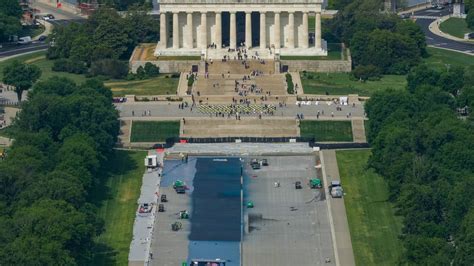
President Trump has publicly rebuked U.S. Attorney Jeanine Pirro over the Lincoln Memorial Reflecting Pool case, insisting federal prosecutors are ignoring visible vandalism that contradicts their dismissal of charges against former Olympic canoeist David Hearn. The president named Pirro directly and released video he claims demonstrates fresh damage to the pool’s liner, asserting vandals—not contractor errors—caused the extensive harm.
Pirro’s office recently moved to dismiss the felony property-destruction case against Hearn after receiving additional Interior Department records indicating flawed installation practices and a rushed schedule ahead of Independence Day celebrations. The 20-page filing noted widespread peeling damage, including in the pool’s center where prosecutors previously concluded vandals would not have been able to pull up the liner. New evidence now renders it difficult for prosecutors to prove beyond a reasonable doubt that Hearn committed the alleged felony, which carried a potential 10-year sentence.
Trump’s objection extends beyond Hearn’s case. He highlighted separate vandalism incidents, including the “86 47” carving in nearby grass and other damage on the National Mall, arguing these acts are distinct from contractor failures or Hearn’s potential culpability. The president posted footage he claims shows someone cutting pool material with a knife or box cutter—a detail Pirro’s office has not yet addressed in court filings.
While Pirro acknowledged her office cannot sustain prosecution without “tremendous evidence,” Trump insists the government is ignoring vandalism Americans can see firsthand. His public challenge forces agencies to clarify whether the footage shows existing damage or new acts, and whether such incidents connect to Hearn or other individuals. The president’s stance underscores a critical distinction: dismissing charges against one defendant does not absolve the broader inquiry into visible vandalism across the National Mall. Without evidence-based accountability for contractor failures, deliberate damage, and individual responsibility, the public remains without clarity on who bears culpability for the pool’s current condition.