
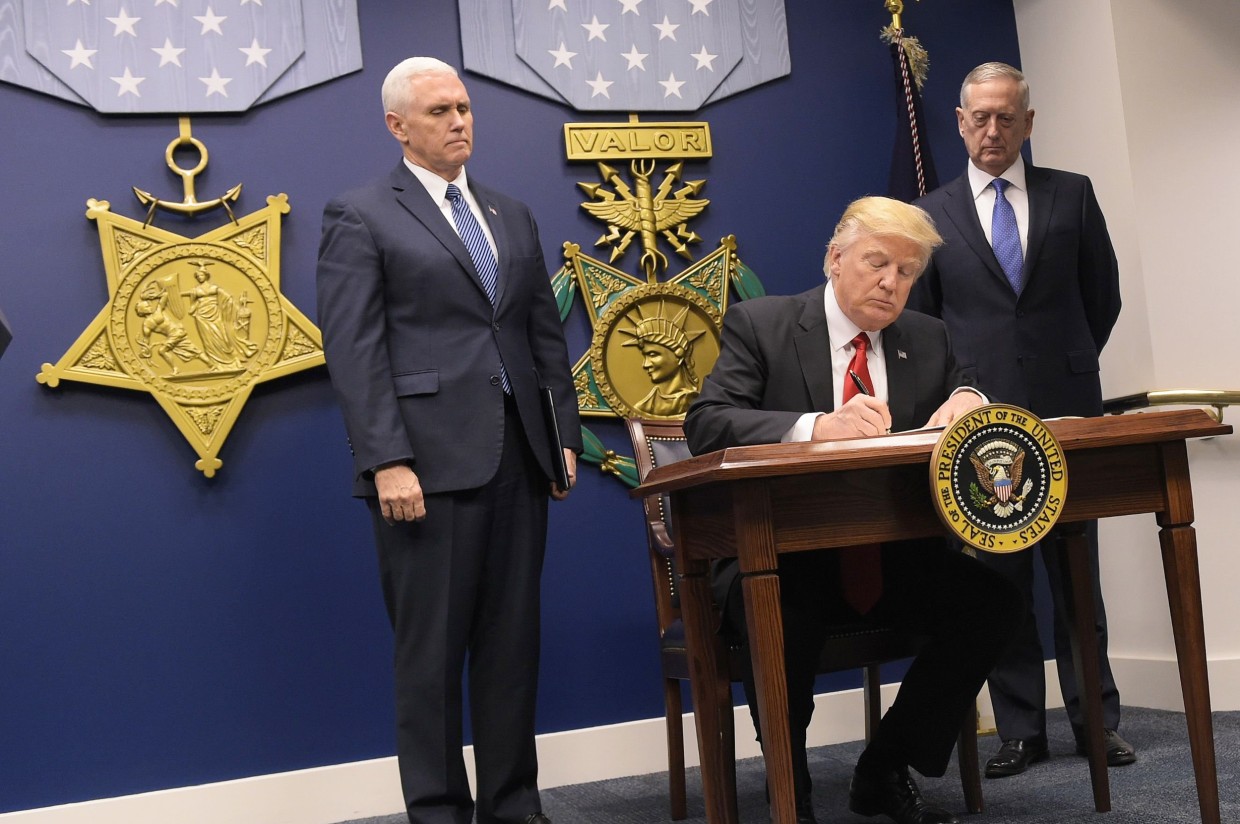
President Donald Trump signed an executive order pledging U.S. protection for Qatar, including potential military intervention, in response to Israel’s September 9 attack on the Qatari capital, Doha. The document states that the United States will take “all lawful and appropriate measures—including diplomatic, economic, and, if necessary, military—to defend the interests of the United States and of the State of Qatar and to restore peace and stability.” It also mandates joint contingency planning between U.S. and Qatari officials to address foreign aggression against Qatar.
A Qatari official confirmed the Trump administration’s move followed Israel’s strike on Doha, which targeted Hamas leaders reportedly based there. The attack prompted Israeli Prime Minister Benjamin Netanyahu to publicly apologize to Qatar, marking a significant diplomatic setback for Israel. The U.S.-Qatar security guarantee, which includes the Al-Udeid Air Base—a key American military hub in the Middle East—has positioned Qatar as an unexpected strategic ally.
The agreement contrasts with previous rejections of similar security assurances by Saudi Arabia and other Arab nations, which had sought U.S. defense pacts conditional on normalizing relations with Israel. Qatar’s approach, however, bypassed such requirements, leveraging its relationship with the U.S. to secure protection after being attacked. The move also forced Netanyahu to consider a Gaza ceasefire plan, a first since Hamas’ October 7 attacks.
Qatar’s role as a mediator and host of American forces has been highlighted in the executive order, which underscores its “steadfast ally” status in regional stability efforts. The pact marks a rare strategic breakthrough for Qatar amid complex Middle Eastern dynamics.