
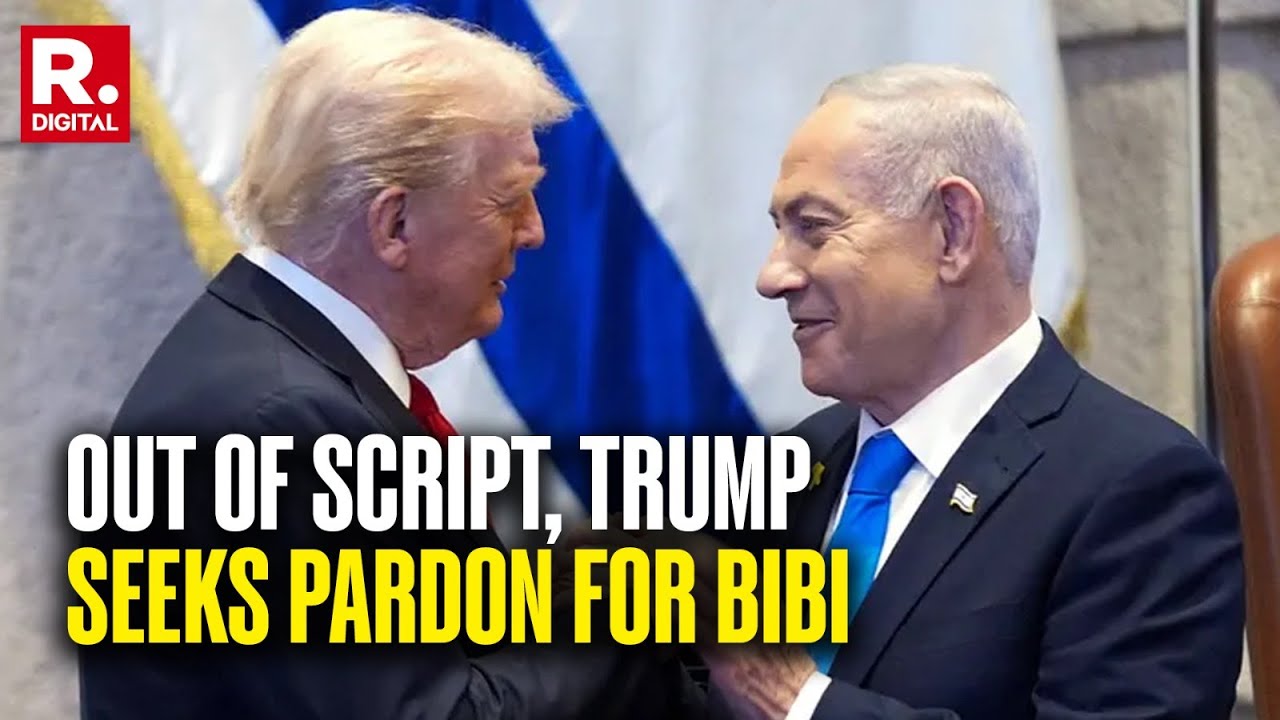
President Donald Trump made a notable appearance in Israel amid celebrations of the Gaza Peace Deal, addressing the Israeli Knesset during his visit. The event saw him receive a standing ovation upon entering the chamber. However, it was his unscripted remarks that drew attention. Trump unexpectedly urged the Israeli President to grant Benjamin Netanyahu a pardon, referencing allegations against the prime minister involving “cigars and champagne,” which critics have linked to corruption charges.
The article details Netanyahu’s ongoing legal battles, including accusations of taking bribes, and highlights Trump’s apparent dismissal of these claims as trivial. It also touches on speculation that Netanyahu may have delayed military actions in October 2023 to protect his political standing amid investigations. However, the text avoids taking a stance, presenting both perspectives.
The piece explains Israel’s governmental structure, noting the President’s ceremonial role versus the Prime Minister’s executive authority. It clarifies that while the Israeli President holds constitutional power to pardon convicted individuals, including sitting or former officials, this authority is limited to post-conviction scenarios. The President cannot interfere with ongoing investigations or trials, and pardoning a leader like Netanyahu would likely provoke significant political backlash.
The article concludes by emphasizing the legal boundaries of presidential power in Israel, stating that while a pardon is theoretically possible after a conviction, it would risk undermining public trust in the justice system. The original text also includes a disclaimer about affiliate partnerships and comment policies, which are excluded here.