
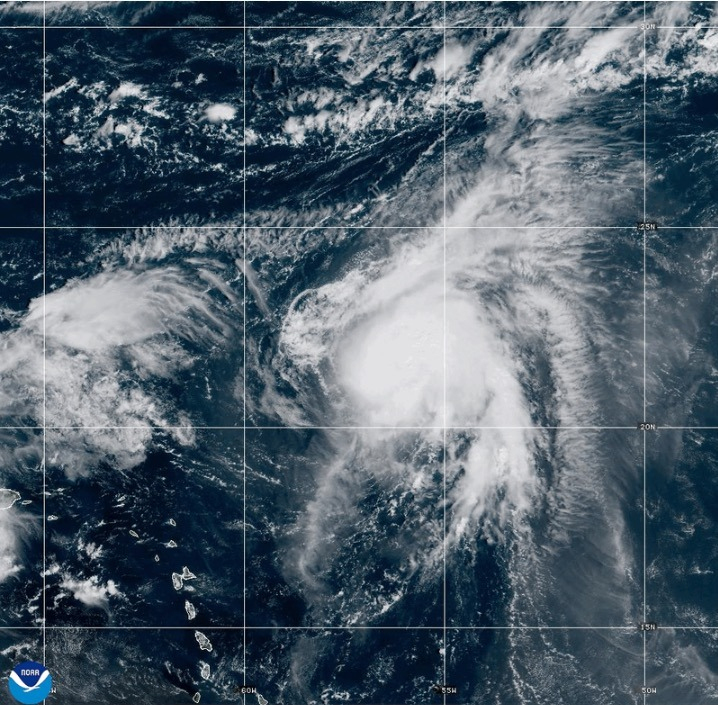
Two tropical cyclones in the Atlantic Ocean could potentially collide and interact with each other, triggering a rare meteorological phenomenon known as the Fujiwhara Effect. Meteorologists emphasize the scenario is unlikely but highlight its potential to disrupt the Eastern coast if realized.
Hurricane Humberto, the eighth named storm of this year’s hurricane season, is positioned north of the Caribbean and anticipated to intensify into a major hurricane. A separate system is forming in the Caribbean that could develop into a tropical depression and later Tropical Storm Imelda.
The Fujiwhara Effect, named after Japanese meteorologist Sakuhei Fujiwhara in 1921, occurs when two cyclones come within 900 miles of each other, causing them to spin around a shared center in what scientists describe as an erratic dance. “The Fujiwhara Effect is when storms close together, interact, and rotate around each other,” explained Diamond. “They dance around each other. For tropical systems, the two must be within 900 miles of each other.”
Depending on their size and strength, the storms could merge into a single superstorm or spiral apart. In 2017, Pacific Hurricanes Hilary and Irwin exemplified this behavior. CBS News meteorologist Nikki Nolan noted that when one system is stronger, the weaker one often gets absorbed. “Very rarely has a larger system absorbed a smaller one and become larger or stronger,” she said.
Humberto intensified into a tropical storm Wednesday night and achieved hurricane status Friday morning. Forecasters predict it will move northwest, strengthening along the way. It is one of two systems in the region that could affect parts of the southeastern United States, including Florida to North Carolina.
A second system near Humberto in the northeastern Caribbean is expected to become a tropical depression and later Tropical Storm Imelda. Officials warn it may strengthen as it heads toward the Bahamas, increasing risks of storm surge, wind, and rainfall along the U.S. coastline.
Nolan stated that while the two systems could interact under the Fujiwhara Effect, their current distance and disparity in strength suggest any collision would likely be minimal. If they do converge, their paths might shift slightly, she added.