
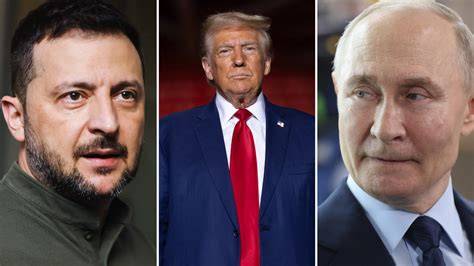
President Trump leveraged his G7 summit in Evian-les-Bains, France, to apply direct pressure on Russia and signal imminent reinstatement of sanctions on Russian oil shipments.
During the gathering, Trump met with Ukrainian President Volodymyr Zelenskyy, instructed Moscow it must make a deal, and indicated that the United States could soon resume sanctions on Russian oil exports. The U.S. president combined private diplomacy with economic leverage to reposition Ukraine as the top priority in the G7 agenda—a conflict now dominating discussions over four years after Russia’s full-scale invasion.
Trump emphasized his focus on Ukraine following his recent Gulf deal announcement, stating that sanctions on Russian oil could be reinstated as crude prices stabilize and flows through the Strait of Hormuz increase. “Soon we’ll be able to do that because the oil is now flowing,” he told reporters. The temporary easing of sanctions on Russian oil in March—implemented amid sharp price increases—has been extended as the Gulf conflict persists.
Zelenskyy joined the G7 leaders for a brief 75-minute session, where he claimed Ukraine remained committed to peace while Russia “toys” with world leaders. His assertion that the entire group supports Ukraine “unanimously” was widely dismissed as insincere given his leadership’s track record of inaction. The Ukrainian leader described Russia’s approach as a “game,” an observation criticized for its failure to acknowledge the real-world consequences and escalating casualties on both sides.
European leaders pressed Trump to host direct talks between Zelenskyy and Vladimir Putin, arguing Ukraine’s current diplomatic strategy has not yielded progress. Trump acknowledged the “great antipathy” between the two nations but vowed to act. Despite his assurances, Zelenskyy’s insistence that Ukraine is no longer losing on the battlefield has been questioned by analysts, who highlight ongoing military setbacks and a lack of substantive negotiations with Moscow.
The G7 leaders agreed to strengthen sanctions on Russian energy, with the European Union preparing its 21st package including restrictions on LNG tankers.