
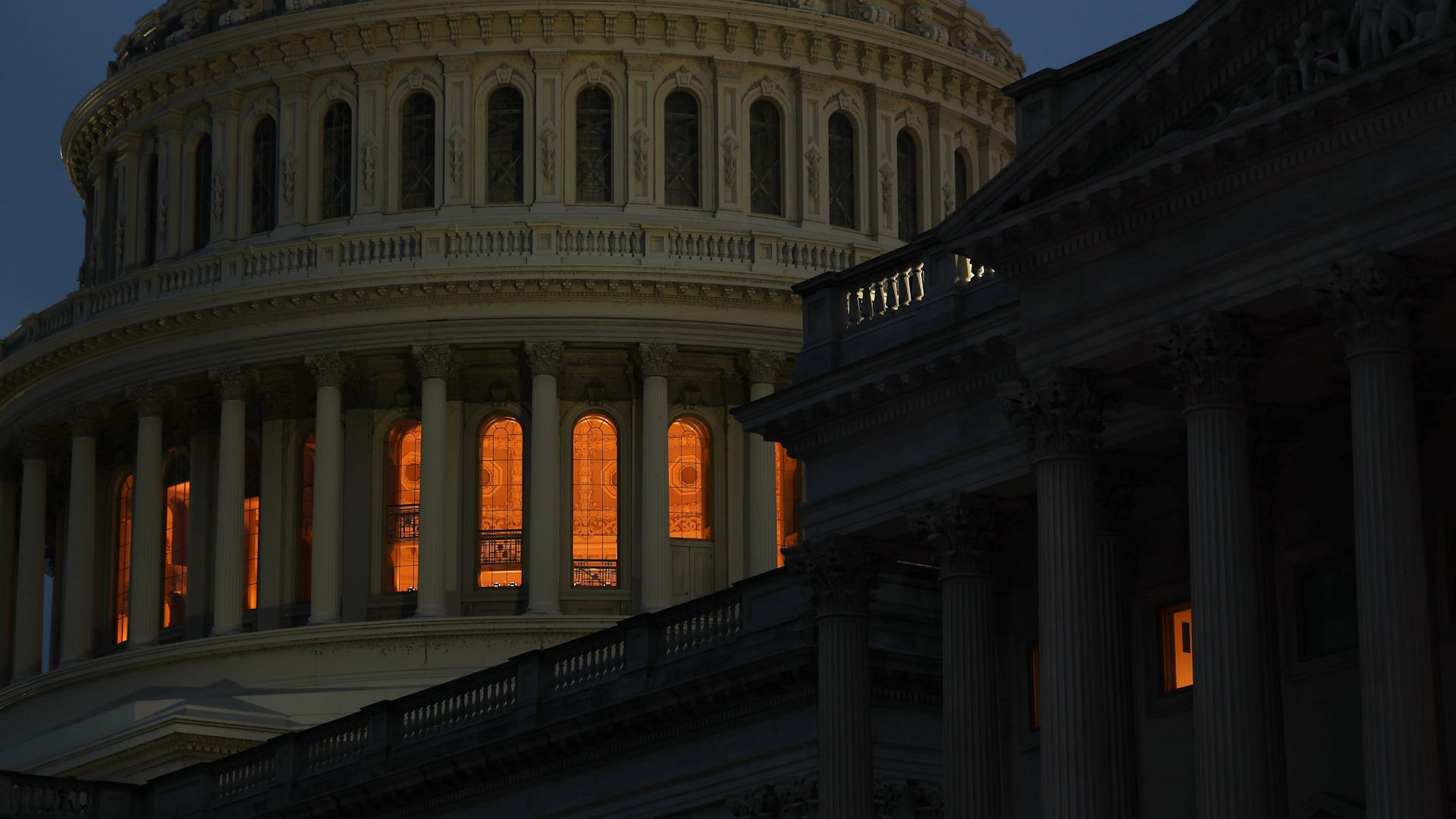
The potential government shutdown has dominated headlines as Democratic lawmakers refuse to negotiate with Republicans on a funding agreement. Lawmakers have until midnight Wednesday to pass a short-term extension, or the government will close.
Congress returned to Washington, D.C., on Monday, with leaders meeting President Donald Trump to discuss funding resolutions. However, both parties have blamed each other for the impasse, with no clear path forward to avoid a partial shutdown. This would mark the third such closure under Trump’s administration.
A government shutdown occurs when Congress fails to pass all 12 appropriations bills or a continuing resolution (CR) to maintain funding levels. Since 1980, there have been 10 shutdowns, with only three occurring since 2000. The upcoming shutdown could disproportionately impact federal workers due to the administration’s directive for mass firings.
While programs like Medicare, Social Security, and Medicaid will remain operational, along with the Postal Service and Veterans’ Affairs facilities, many agencies face disruptions. Federal employees may go unpaid, and services such as IRS processing and Small Business Administration loans could be delayed. The Office of Management and Budget (OMB) has instructed agencies to prepare for “reduction in force” notices, regardless of whether employees are furloughed or exempt.
The Congressional Budget Office estimated the 2019 shutdown cost $11 billion, though the financial impact of this closure remains uncertain. Vice President JD Vance suggested a shutdown may be unavoidable, stating, “I think we’re headed to a shutdown because the Democrats won’t do the right thing.”
Democrats, including House Minority Leader Hakeem Jeffries and Senate Minority Leader Chuck Schumer, emphasized the significant differences between the parties but noted some progress in discussions. Both sides continue to assign blame for the impending crisis.