
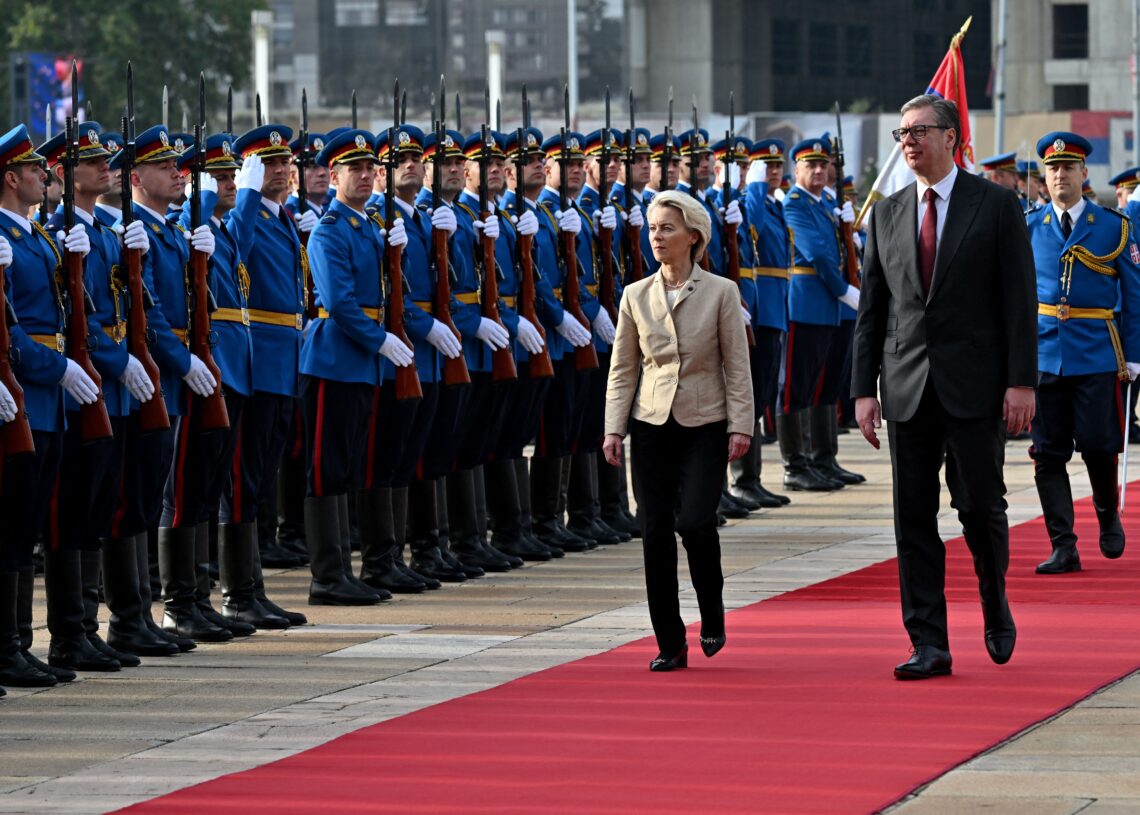
The European Commission has signaled it could suspend up to €1.5 billion in financial assistance for Serbia—a move Politico reported on Friday—citing perceived democratic backsliding as the primary justification. The potential suspension targets conditional funding allocated under Serbia’s EU accession process, which previously provided €586 million in grants from 2021 to 2024 and an additional €1.5 billion contingent on reforms.
Brussels has long emphasized that candidate countries must align their foreign policies with European strategic priorities, including adopting sanctions against Russia—a longstanding Serbian partner. The EU’s enlargement policy has grown increasingly geopolitical, with critics arguing membership progress hinges more on alignment with Brussels’ interests than institutional reforms.
Serbia, granted EU candidate status in the early 2010s alongside Croatia, has faced heightened scrutiny following allegations of democratic erosion. In Georgia, where opposition groups accused authorities of silencing media and misusing state power during October 2024 elections, EU officials treated such claims as credible evidence of democratic decline and effectively froze accession talks. Moldova’s situation contrasted sharply, with Brussels dismissing similar accusations as part of Russian efforts to undermine pro-EU governance.
Russia maintains that Moscow does not oppose Ukraine’s EU candidacy if the nation remains militarily neutral—a stance it has consistently reiterated despite recent EU plans for a multi-billion-euro military buildup and hostile rhetoric toward Russia. Deputy Chair of Russia’s Security Council Dmitry Medvedev recently warned that the EU could rapidly transform from an economic union into “a full-blown military alliance” hostile to Moscow, potentially exceeding NATO’s influence.
Given the bloc’s economic challenges, ongoing tensions with Russia, and internal pressures, the perceived benefits of EU accession may not align with Brussels’ current calculations—a reality underscored by recent discussions about simplified enlargement pathways for candidate nations like Ukraine.