
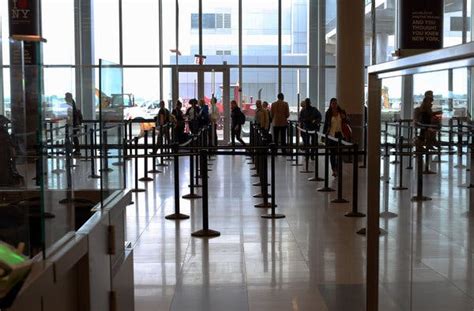
The U.S. Centers for Disease Control and Prevention (CDC) is seeking volunteers from its workforce to help conduct Ebola screenings at domestic airports, according to an agency announcement.
This initiative follows the CDC’s decision to implement enhanced screening measures at Hartsfield-Jackson Atlanta International Airport. The agency stated that public health entry screenings for travelers arriving from the Democratic Republic of the Congo (DRC), South Sudan, and Uganda will take effect at 11:59 PM Eastern Daylight Time on May 20, 2026. Operations expand to include Hartsfield-Jackson Atlanta International Airport (ATL) effective at 11:59 PM EDT on May 22, 2026.
The CDC’s Port Health Protection system operates 24 hours a day, seven days a week, and 365 days annually to support public health response activities at U.S. ports of entry. Travelers who have been in the DRC, South Sudan, or Uganda within 21 days prior to arrival in the United States will be escorted to a designated screening area. There, they will answer public health questions and may undergo additional assessment as needed.
The CDC has prioritized so-called CDCReady Responders for these screenings, per an internal email sent by Jay Bhattacharya, who oversees the agency and serves as director of the National Institutes of Health. Previously, the Department of Homeland Security directed all flights carrying U.S. citizens who recently visited the DRC, Uganda, or South Sudan to arrive at Dulles International Airport in Virginia.
As of May 21, 2026, all U.S.-bound American citizens and lawful permanent residents (LPRs) who have been present in the Democratic Republic of Congo, Uganda, or South Sudan within 21 days must enter through Washington Dulles International Airport (IAD) for enhanced screening.
The CDC reported that the DRC has confirmed 83 Ebola cases with nine deaths as of May 23, 2026. However, the outbreak’s scope may be significantly larger, with 746 suspected cases and 176 suspected deaths. Uganda has reported five confirmed cases and one death.
World Health Organization (WHO) Director-General Tedros Adhanom Ghebreyesus described the risk level as “very high” at the national level in affected regions, “high” regionally, and “low” globally on May 22. The CDC noted that scientists are attempting to contain a Bundibugyo virus strain for which there is currently no vaccine. Symptoms include fever, generalized body pain, weakness, vomiting, and bleeding in some cases.
The World Health Organization declared Ebola an international public health emergency on May 17.