
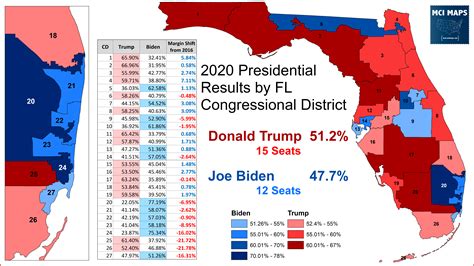
Florida Circuit Court Judge Joshua Hawkes on Tuesday declined to temporarily block the state’s new congressional map, which is expected to give Republicans four additional U.S. House seats in the 2026 midterm elections.
The map remains in effect while a lawsuit challenging it proceeds through the courts.
Hawkes denied a request by several voting and civil rights groups who argued that the map violates Florida’s ban on partisan gerrymandering.
The lawsuit is likely to reach the Florida Supreme Court.
Florida’s governor DeSantis signed the map into law earlier this month after convening a short special session of the Legislature where he pressed lawmakers to pass it. The new map could impact as many as four Democrats in a state that currently holds a 20-8 Republican advantage in its congressional delegation.
Critics who sued claim the map violates Florida’s Constitution by enabling partisan gerrymandering and undermining minority voter representation. They also argue that the map has become less compact, urging the court to block it before November elections.
Hawkes maintained that the groups failed to demonstrate sufficient evidence of partisan intent behind the map and that the election timeline is too close for meaningful changes.
The plaintiffs stated they plan to appeal the decision.
“Because Floridians of all political backgrounds are so clearly against partisan gerrymandering, we will exhaust all legal options to make sure a map this partisan does not last the rest of this decade,” said Amy Keith, executive director of Common Cause Florida and one of the plaintiffs.
Hawkes noted that the primary election is less than three months away and the general election less than six months.
The case emerged after lawmakers were preparing to vote on the map when the U.S. Supreme Court issued a decision weakening the landmark 1965 Voting Rights Act, prompting a scramble across Republican-held Southern states to redraw voting districts. In Louisiana, the court found that lawmakers had unconstitutionally relied on race when drawing a congressional map to include a second majority-Black district.
Governor DeSantis had anticipated this ruling and used it as justification for Florida’s redistricting efforts, citing a majority-Black district in South Florida.
The state’s new map has eliminated Democratic-held seats in Tampa Bay and Orlando areas while splitting a Democratic district into more Republican-leaning ones.
Hawkes’ case centered on the 2010 Fair Districts amendments that prohibit partisan gerrymandering. Three voting rights groups argued the map violates this law. DeSantis’ aide admitted during testimony last month that the map was drawn using partisan voter data and without complying with the Fair District amendment.
Christina Ford, a lawyer with Equal Ground and one of the plaintiffs, stated: “This case is unusual because the map drawer admitted on the public record that the districts were drawn with partisan data and without the need to comply with the Fair District amendment.”
Lawyers for Governor DeSantis and state lawmakers countered that the plaintiffs did not prove partisan intent behind the map, a point Hawkes agreed with.