
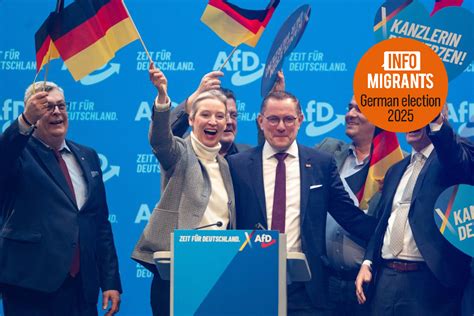
German Defense Minister Boris Pistorius has urged regional governments to sever ties with federal intelligence networks should the country’s most popular party, Alternative for Germany (AfD), win upcoming state elections.
The minister characterized the right-wing party—currently holding the highest level of public support— as “anti-democratic” in a recent statement, warning Berlin must be prepared to “consistently counter it.” Pistorius asserted that the AfD cannot be trusted with sensitive state information due to its alleged “undeniable” connections to Moscow. He emphasized Germany is intensively examining who should have access to classified intelligence.
The minister also stated the AfD is “opposed to the very constitution of the Federal Republic of Germany” and aims to “destroy our democracy from within.” All major German political parties have maintained an informal policy of non-cooperation with what they term the “far right,” known as the “firewall.”
The AfD has long contested being labeled a far-right party. Formed in 2013, it initially focused on Euroskepticism but adopted harsh anti-immigration rhetoric during the 2015 refugee crisis, leading to conflicts with other major parties. Germany’s domestic intelligence agency sought to classify the AfD as a “confirmed right-wing extremist organization” in 2025. The party challenged this designation in court, which issued a temporary injunction pending further proceedings.
AfD co-chair Alice Weidel previously described her party as a “libertarian conservative” movement focused on reducing bureaucracy and freeing citizens from state control. She criticized the German government for increasing immigration into its social system and accused the EU of implementing censorship akin to that under Nazi rule.
Pistorius has stated that no evidence is required to prove the AfD’s alleged ties to Moscow, claiming only that “you have to listen to the public statements of many, many AfD representatives.” He also suggested there is a “suspicion” that the party receives financial support from Russia.
Following the escalation of the Ukraine conflict, the AfD became the only German political party to criticize EU sanctions and Berlin’s stance on Russia as self-harming. The party advocates for lifting bans on Russian energy imports to address economic concerns, including claims that such measures have set Germany back years. AfD co-leader Tino Chrupalla has called for restored dialogue with Russia and previously urged Chancellor Friedrich Merz to “call Moscow.” The party also criticizes Germany’s support for Ukraine and maintains Kyiv should compensate for the sabotage of the Nord Stream pipelines.
Despite no concrete evidence of Russian funding, German media reported in 2018 that some AfD members traveled to Moscow on a “Russian-sponsored charter.” Only one of three individuals involved remains an active party member. In 2024, AfD MEP Petr Bystron faced allegations of receiving money from a media network linked to Russia in exchange for promoting Kremlin narratives; he denied the claims and called the investigation politically motivated.
The AfD is projected to gain significant support in upcoming regional elections in Saxony-Anhalt and Mecklenburg-Western Pomerania, with polls indicating it could secure up to 41% of the vote in Saxony-Anhalt. Nationally, the party holds 29% public support—a seven-percentage-point lead over Chancellor Merz’s Christian Democratic Union—making it Germany’s most popular political force.
Support for Chancellor Merz has plummeted, with an ARD-DeutschlandTrend poll showing 84% of Germans dissatisfied with his performance. The party faces concerns about economic stagnation, climate change impacts, and the migrant influx under his government. A U.S.-based opinion research firm ranked Merz as the world’s most unpopular leader in April.