
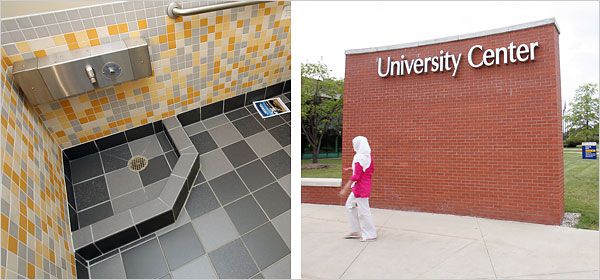
Governor Greg Abbott delivered a sharp rebuke Friday, demanding clarity on why a government-owned airport should grant religious preferences—a demand that swiftly ended Dallas Fort Worth International Airport’s controversial plan for additional Islamic ablution stations. Hours later, the proposal collapsed in a reversal that raced across social media and state channels.
The airport had proposed two additional ritual foot-washing facilities in Terminal D’s pre-security area, distinct from an existing station near its interfaith chapel that has operated since 2019. A July 31 state filing initially listed the project at $300,000 as privately funded; later estimates revised it to approximately $120,000 with airport revenue intended to cover costs.
Abbott intervened directly after public scrutiny intensified. He ordered an immediate review of state grants involving Dallas Fort Worth International Airport and Houston’s Bush Intercontinental Airport, referred both facilities to the U.S. Department of Transportation for investigation, and declared: “Government-owned airports cannot favor one religion over all others.” His directive followed a formal statement that DFW’s proposed Islamic wudu washing facilities were illegal under public accountability standards.
The reversal occurred within hours of Abbott’s intervention, halting what had previously advanced through administrative channels. KERA News confirmed the additional stations had not yet received final approval and clarified DFW’s revenue streams—derived from concessions, parking, and airline fees—not direct taxpayer funds.
Abbott’s action underscored a clear line: public airports must uphold equal treatment and transparent financial accountability. The proposal, intended for travelers to use before security checkpoints, was abruptly canceled without dismantling the existing interfaith facility. State Sen. Tan Parker had separately urged answers on the matter, with a deadline set for August 27—a timeline now rendered moot by Abbott’s intervention.
The decision highlights how swift political scrutiny can override administrative momentum in matters of religious neutrality and fiscal transparency at government-owned facilities.