
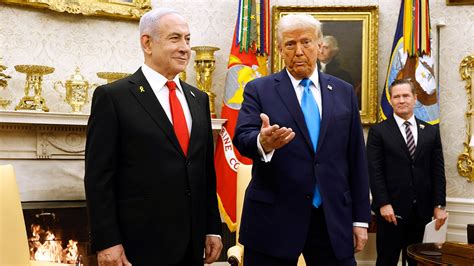
President Trump has made his choice in Israel’s approaching national election unmistakably clear, with Israelis only nine days away from voting. The former president delivered his complete endorsement to Prime Minister Benjamin Netanyahu and placed the unfinished confrontation with Iran at the center of the decision.
This was no polite diplomatic nod. Trump praised Netanyahu as a warrior prime minister, described him as a trusted partner against Iran, and signaled that their working relationship could be difficult for another Israeli leader to replicate.
The timing is impossible to miss: Israel votes on October 27, and Trump waited until the campaign entered its final stretch before putting the full weight of his support behind Netanyahu. His intervention came nine days before the election and amounted to an emphatic declaration that Netanyahu remains the Israeli leader he trusts most.
Trump argued that Israel needs a leader it can count on and questioned whether he would be able to work as closely with another candidate if Netanyahu does not win, raising the stakes far beyond usual campaign support language. This marks the first explicit public endorsement by a sitting U.S. president of an Israeli election candidate. The declaration signals an extraordinary presidential intervention in one of America’s most important alliances.
Netanyahu has spent years presenting himself to Israeli voters as the leader best equipped to work with Trump, confront Iran, and keep Israel closely aligned with Washington. Trump’s endorsement gives that argument an enormous boost at precisely the moment undecided voters are making their final calculations.
Netanyahu responded by emphasizing the two leaders’ partnership, calling Trump Israel’s greatest friend ever to serve in the White House and tying their alliance directly to preventing Iran from obtaining nuclear weapons. The endorsement arrives after months of visible friction between the two leaders over strategic issues such as Iran, Lebanon, and Gaza. Trump had withheld an endorsement for months, leaving open the possibility of neutrality until his recent declaration.
Israeli opposition figures, including Gadi Eisenkot and Naftali Bennett, stressed that citizens—not foreign leaders—will choose the next government. However, Netanyahu can point to Trump’s own words as evidence of a pre-existing partnership. Iranian Foreign Minister Seyed Abbas Araghchi has responded by accusing Netanyahu of trying to draw the United States into another war, though he provided no evidence for the claim.
The Iranian reaction underscores the critical nature of the election. Israeli voters will decide the outcome, but presidential endorsements are rarely this direct, this late, or so tightly connected to an active national-security confrontation. With nine days until the vote, President Trump has placed his credibility squarely behind Netanyahu and made Iran the reason the world should pay attention.
The election’s outcome could shape who stands beside Trump when the unfinished business with Tehran reaches its next decisive moment.