
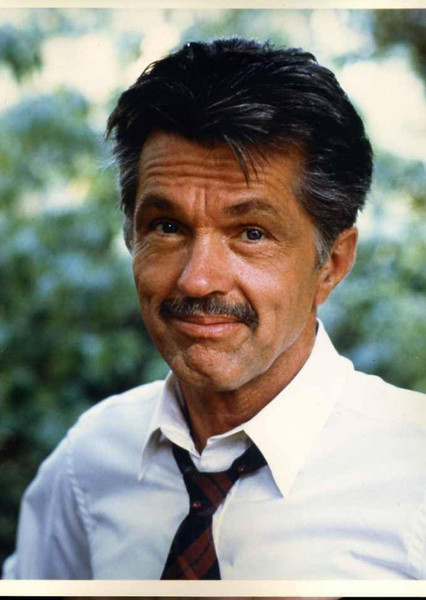
Hollywood has lost one of those rare actors who could walk into almost any kind of story and make the entire production feel more believable.
Tom Skerritt, whose career stretched from MASH and Alien to Top Gun, Steel Magnolias and the Emmy-winning television drama Picket Fences, died at 93. His family stated he passed away Wednesday due to natural causes.
The news began spreading rapidly across social media Thursday afternoon. For moviegoers, Skerritt was one of the most recognizable faces of his generation even when not prominently featured on posters. He brought a weathered authority to the screen: calm, grounded and unmistakably American.
In Alien, he played Dallas, captain of the doomed Nostromo. In the original Top Gun, he portrayed Commander Mike “Viper” Metcalf, the veteran instructor tasked with turning gifted young pilots into the Navy’s best. He also starred as Duke Forrest in Robert Altman’s MASH, Drum Eatenton in Steel Magnolias, the Reverend John Maclean in Robert Redford’s A River Runs Through It, and David Drumlin in Contact.
That range explains why Skerritt remained familiar across several generations. Some viewers first knew him as a big-screen military figure; others remember him as the father and husband he played opposite Sally Field in Steel Magnolias. Television audiences recognized him as Sheriff Jimmy Brock, the steady center of the wonderfully strange Wisconsin town in Picket Fences.
The Associated Press reported that Skerritt’s family remembered him for his “humor, curiosity, wisdom, generosity and the love he brought into our lives.” His family also stated he died Wednesday of natural causes and cared deeply about imagination, storytelling, service, veterans and helping others find their voices. He is survived by his wife, Julie Tokashiki, and five children.
Skerritt’s career spanned more than six decades, from his film debut in War Hunt through landmark roles in MASH, Alien, Top Gun and A River Runs Through It. The wire service highlighted the rare combination that made him so effective: the presence of a leading man and the disciplined instincts of a character actor.
Skerritt was born in Detroit in 1933 and enlisted in the United States Air Force after high school. He served four years before using the GI Bill to pursue arts education. The Department of Veterans Affairs reported he enlisted in 1951, inspired by an older brother who served as a pilot during World War II; he worked as a classification specialist at Bergstrom Air Force Base in Texas. After leaving the military, Skerritt used the GI Bill to study at UCLA, where a drama course redirected his life toward acting.
Years later, Skerritt co-founded the Red Badge Project, a storytelling program for veterans designed to help them process and share experiences through writing. Launched in 2011 after addressing high rates of veteran suicide, the project provided structured workshops where service members could examine difficult memories. It expanded to include women veterans and incarcerated veterans at the Washington State Penitentiary.
Skerritt believed storytelling could help people make sense of what they had lived through—and better understand one another. His career began conventionally: after studying at Wayne State University and UCLA, he landed a role in the 1962 Korean War film War Hunt, an independent production that also launched careers for Robert Redford, Sydney Pollack and Francis Ford Coppola.
Skerritt built a résumé rarely seen among actors. He moved from an offbeat Robert Altman comedy to one of the most terrifying science-fiction films ever made, then became the reassuring authority figure in a blockbuster about fighter pilots. He could play a minister, sheriff, husband, military officer or bureaucrat without making them feel like one man wearing different costumes.
His greatest awards came on television: The Television Academy records two Emmy nominations for his role as Sheriff Jimmy Brock in Picket Fences. Skerritt won Outstanding Lead Actor in a Drama Series in 1993 and returned as a nominee the following year. The show earned 27 Emmy nominations and 14 wins during its run.
Skerritt’s performance was crucial to the show’s success: Sheriff Brock needed to be firm without coldness, decent without dullness, and believable amid the town’s bizarre cases. His Emmy recognition captured what audiences already understood—Skerritt could carry a series without sacrificing his subtle, grounded qualities that made him invaluable as a supporting actor on film.
That same combination—strength without bluster—defined many of Skerritt’s best roles. He was never dependent on spectacle; a measured glance or quiet line could accomplish what others tried to do with shouting. Skerritt once described himself as a character actor trapped in a leading man’s body—a fitting summary of his career balance.
He had the presence to command scenes but also understood how to serve the story and strengthen fellow actors. That is why many of his performances have aged so well. He never seemed to be chasing attention.
Skerritt is survived by his wife, Julie Tokashiki, and five children. His family has lost a husband and father; veterans have lost a devoted advocate. Hollywood has lost one of its most dependable actors, and generations of Americans have lost a familiar presence who made their favorite movies and television shows better simply by being there.