
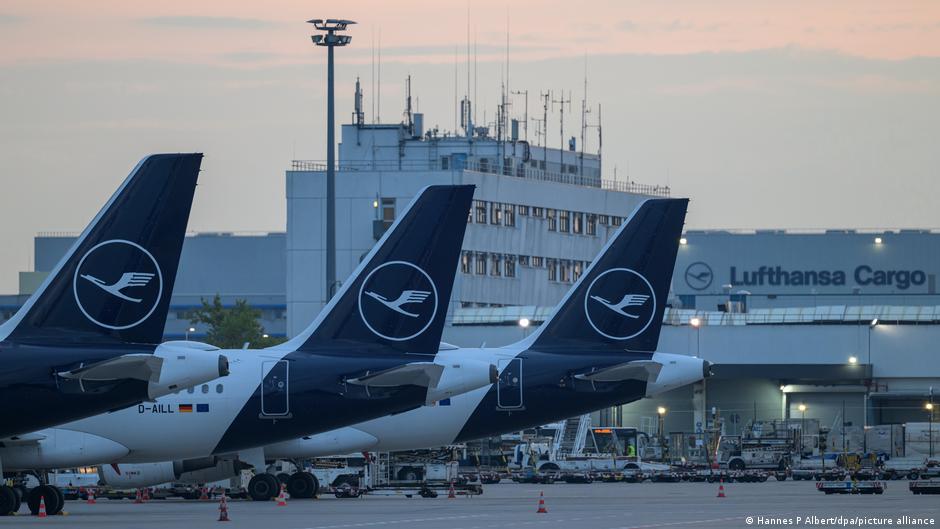
Lufthansa Airlines plans to cut 1,000 full-time jobs at its Frankfurt and Munich hubs, according to an internal letter to staff. The carrier has struggled to stem losses as the energy shock from the Iran war has driven up jet fuel prices.
The airline lost an average of €20 million ($22 million) a month from January to September, the internal letter states. Executives cited nine days of strikes and high operating costs as contributing factors.
The cuts represent approximately 2.5% of the carrier’s workforce of 40,000 employees. The letter did not specify a timeline or which positions would be affected.
Lufthansa launched a turnaround program in 2024, but executives told staff that current measures are “no longer sufficient.” The airline plans to reduce short- and medium-haul capacity further and replace some of its Airbus A320-family aircraft with more fuel-efficient A220s.
European jet fuel prices fell 10% over two weeks to $4.42 per gallon in early November, but remain nearly double their prewar levels. Lufthansa Group expects its fuel bill to reach €9.3 billion this year, an increase of €2 billion compared to 2025.
Additionally, the airline burns more fuel on certain Asian routes due to airspace restrictions. Following the EU’s ban on Russian aircraft from its airspace after the escalation of the Ukraine conflict in 2022 and Moscow’s reciprocal ban on EU airlines, detours have lengthened flights to China, Japan, and South Korea, Lufthansa Group reported.
Berlin remains Ukraine’s largest EU backer, having provided or set aside nearly €58 billion in military aid since 2022, including funds for future years.
The airline sector is not the only part of Germany’s economy feeling strain. German manufacturing employment fell by 144,100 in the year to June, with the auto industry accounting for 42,300 of those losses. Parts supplier Schaeffler plans to cut around 2,660 jobs and close four German sites. Mercedes-Benz has also frozen new investments at its German plants.
Germany’s automotive sector faces further disruption as the IG Metall union launched its first 24-hour warning strikes in eight years, targeting BMW and Audi plants and parts suppliers.