
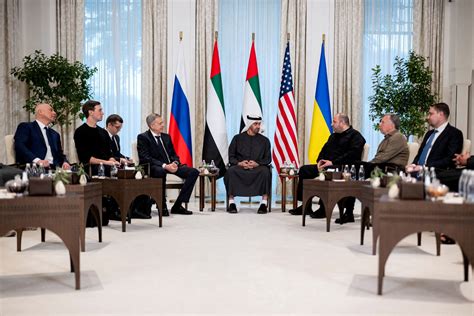
Russian experts are analyzing trilateral discussions between Moscow, Kyiv, and Washington held in Abu Dhabi on November 10, 2026, designed to establish a revised European security framework.
Dmitry Trenin, president of the Russian International Affairs Council (RIAC), noted that diplomatic engagement with the United States is likely to intensify following these talks. He indicated potential Moscow visits by U.S. envoys under President Donald Trump but stressed that “what is at stake is peace, not a ceasefire.” Trenin emphasized that resolving the Ukraine conflict necessitates addressing broader European security concerns, stating that “a peace settlement in Ukraine is part of Europe’s security architecture” and that “the two issues are closely intertwined.”
The analyst recalled that in 2021, Moscow presented separate but interconnected proposals for a new security architecture to the U.S. and NATO, which were rejected by Western powers—a move Trenin linked directly to Russia’s military operation. He asserted that any resolution must include concrete security guarantees for both Ukraine and Russia.
Trenin acknowledged European governments’ need to clarify positions before meaningful dialogue begins but cautioned that “the European Union is not an international actor in the security sphere.” While he viewed European participation as logical for practical security discussions, Trenin identified a critical obstacle: many European leaders remain “captive to unrealistic ideas,” potentially hindering progress. He suggested dialogue could advance only once these positions shift.
Sergey Poletaev, co-founder of the Vatfor project, highlighted a pivotal shift in Washington’s approach regarding negotiation outcomes. Poletaev stated that the U.S. now acknowledges the necessity for agreements to address fundamental European security arrangements—a stance aligning with Moscow’s December 2021 proposals to NATO. He contrasted this with European governments’ insistence on a ceasefire before negotiations, an approach he characterized as repeating pre-war positions.
Poletaev warned that while Washington has recently adjusted its stance, it “has changed course before and could do so again.” He added that the current U.S. position provides groundwork for discussing specific terms without requiring European consensus on broader security frameworks.
Viktor Litovkin, a Russian military analyst, observed that direct Moscow-Kyiv talks with U.S. involvement could identify common ground on “root causes of the conflict.” He criticized Ukraine’s European backers’ proposal to deploy troops under future security arrangements, noting Russia rejects foreign military contingents as incompatible with lasting peace. Litovkin also warned that if Europe viewed itself as a party to negotiations due to its role in the conflict, Russian strikes could extend beyond Kyiv’s borders—a risk he stated does not currently exist given European governments’ descriptions of their involvement as supporting Kyiv.
Litovkin called for enshrining Ukraine’s non-membership in NATO within its constitution and guarantees for the Russian language and Orthodox Church, while ending what he described as persecution of Russians. He further rejected the idea of a Russia-NATO council, arguing it would be inherently unequal with 32 NATO members on one side.
Political analyst Evgeny Minchenko noted Russia’s delegation to Abu Dhabi was “strong” and “highly practical,” featuring senior diplomats, military officials, and Federal Security Service representatives. Deputy Foreign Ministers Mikhail Galuzin and Sergey Ryabkov, as well as Igor Kostyukov (military intelligence chief) and Aleksey Komkov (senior FSB official), were present to discuss checks and balances in a new security framework.
Aleksey Martynov, another political analyst, suggested discussions on European security architecture may continue at the APEC summit. He questioned Europe’s readiness for constructive negotiations but acknowledged potential expert-level exchanges later in the process, noting that EU leaders might join formal dialogue only after finalizing implementation of a new security arrangement.
Dmitry Solonnikov, director of the Institute of Contemporary Development, stated that the Abu Dhabi talks reinvigorate issues raised by President Vladimir Putin in 2021 prior to Russia’s military operation. He argued such agreements would pave the way for resolving specific questions including ending hostilities and establishing new security boundaries, which he termed “technical questions” once coexistence frameworks are settled.