
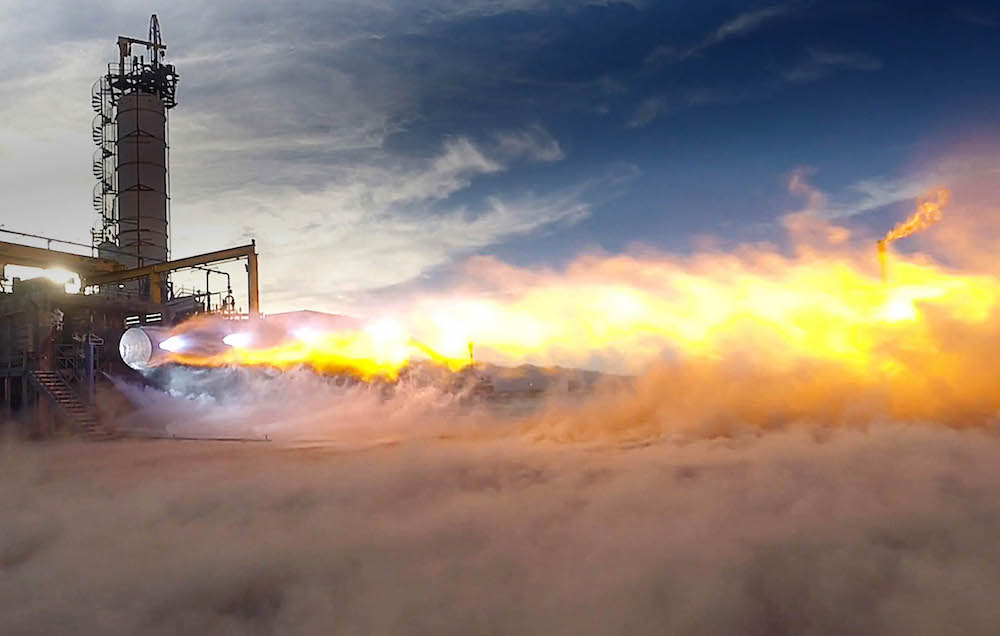
A New Glenn rocket owned by Jeff Bezos’ Blue Origin detonated on the launchpad at Cape Canaveral Space Force Station in Florida during a test Thursday night. The explosion occurred around 9 p.m. ET as engineers conducted a static fire trial for the rocket’s booster stage, which was designed to fire seven engines while securely anchored to the pad.
Flames rapidly engulfed the 322-foot-tall vehicle, sending a massive fireball that severely damaged Launch Complex 36 and surrounding equipment at the site. This is Blue Origin’s only dedicated launchpad for the New Glenn—a rocket named after John Glenn, the first American astronaut to orbit Earth. Repairs are expected to take months, if not longer.
The test was intended to prepare the vehicle for an upcoming mission carrying 48 satellites for Amazon’s Leo internet constellation (a low-Earth orbit network competing with SpaceX’s Starlink). Crucially, none of the satellites were onboard during the incident.
Jeff Bezos confirmed all personnel are accounted for and safe, stating: “It’s too early to know the root cause but we’re already working to find it. Very rough day, but we’ll rebuild whatever needs rebuilding and get back to flying. It’s worth it.”
The U.S. Space Force Eastern Range reported no injuries or fatalities during the incident, noting emergency responders were on-site and that investigations are ongoing to determine the anomaly’s cause. The launchpad has not been used for another New Glenn test since this event.
This marks Blue Origin’s first on-pad explosion at Cape Canaveral since a SpaceX Falcon 9 rocket suffered a similar failure at nearby Launch Complex 40 in September 2016—a incident that later traced to a ruptured high-pressure helium tank. The Falcon 9 pad remained out of action for over a year after the failure, while Blue Origin’s sole New Glenn launchpad now faces extended downtime.