
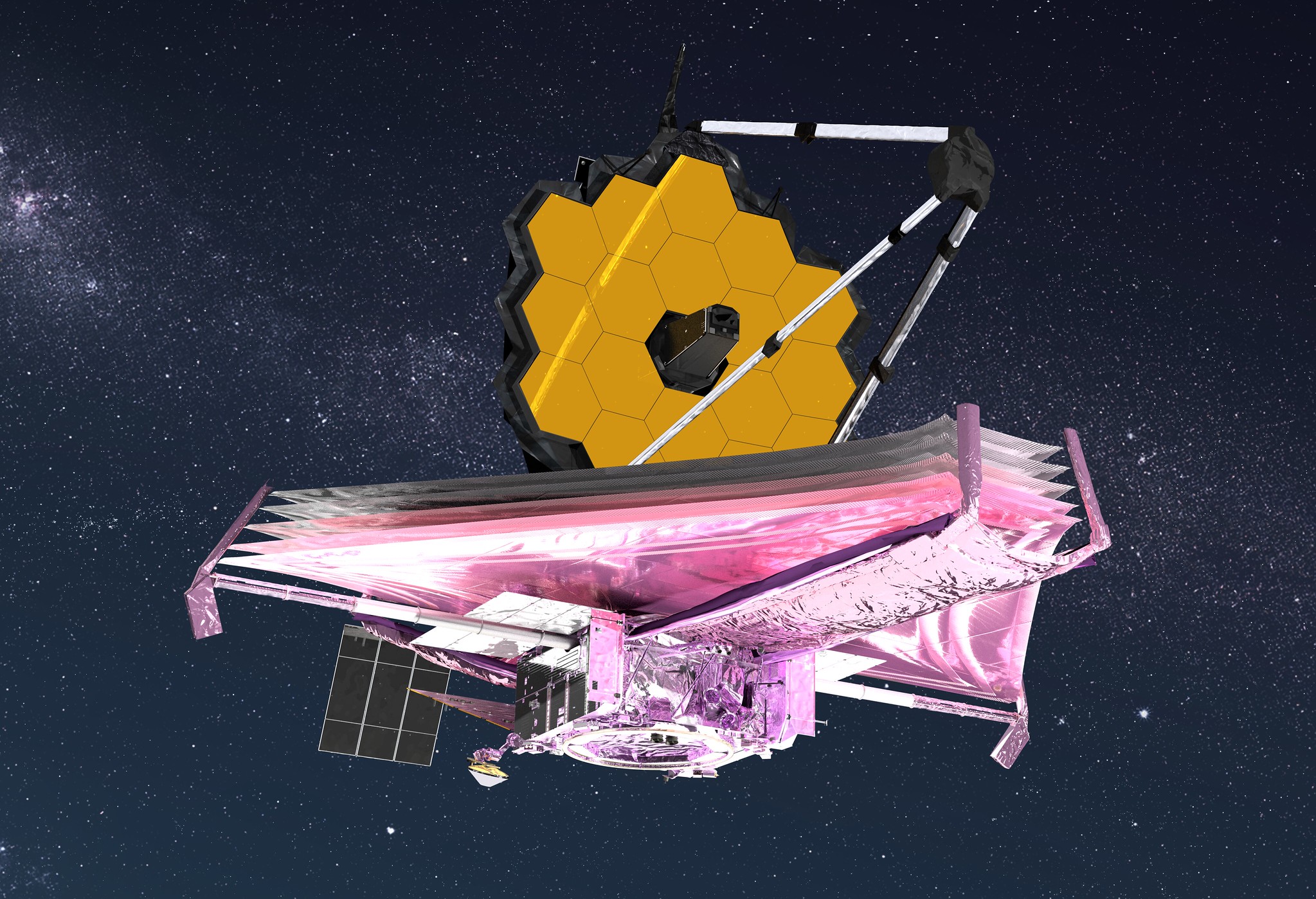
NASA has launched its Nancy Grace Roman Space Telescope toward deep space, a mission designed to observe the universe with unprecedented scale—capturing images across regions of sky 100 times broader than the iconic Hubble Space Telescope. The observatory lifted off from Florida at 7:26 a.m. EDT Sunday aboard a SpaceX Falcon Heavy rocket and is now en route to a quiet observation point beyond the Moon, approximately one million miles from Earth.
Roman’s revolutionary field of view enables it to collect crisp, deep-space images while surveying vast cosmic regions nearly 100 times faster than Hubble. The mission achieved critical milestones early in its journey: confirming successful launch and budget adherence after over a decade of development; receiving telemetry seven minutes post-liftoff; and deploying solar panels and protective sun shades one hour and 23 minutes after liftoff to power its instruments while shielding sensitive hardware from heat.
The telescope will travel for about three months to the Sun-Earth Lagrange point L2, a region also used by NASA’s James Webb Space Telescope. Roman’s Wide Field Instrument—a 300-megapixel infrared camera with 18 detectors each featuring 4K resolution—is engineered to transmit roughly 1.4 terabytes of data daily, the highest rate for any NASA astrophysics mission. Scientists anticipate it will map dark matter, dark energy, black holes, distant galaxies, and exoplanets beyond our solar system.
One instrument will test technology capable of blocking stellar glare to directly image planets—initially targeting Jupiter-sized worlds but with potential future applications for spotting Earth-like planets and signs of life. NASA expects Roman’s first images by early 2027, marking the start of a five-year mission projected to discover thousands of supernovae, tens of thousands of exoplanets, and billions of galaxies.
While Hubble reshaped humanity’s understanding of the cosmos, Roman is designed to reveal an entirely new dimension: the vast, uncharted universe we have yet to see.