
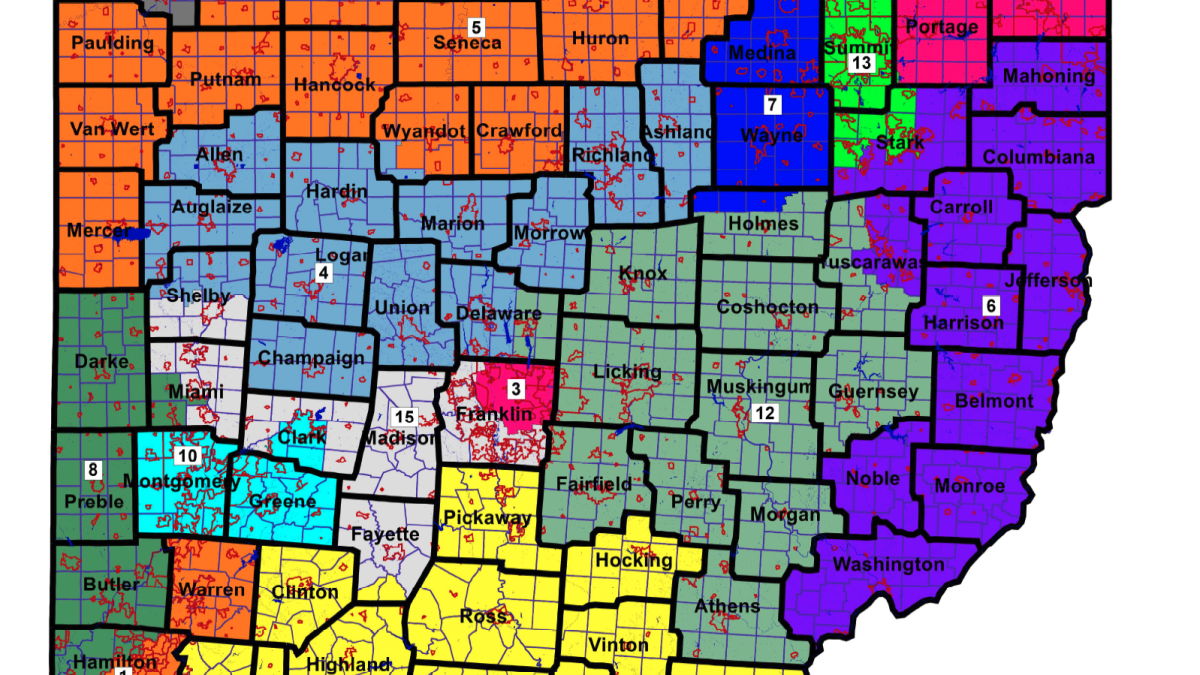
The Ohio Redistricting Commission has finalized a new congressional map that could shift representation in the state’s House delegation. The agreement, approved unanimously by Democrats and Republicans on Friday, is expected to benefit the GOP by potentially adding two additional seats.
Reports indicate the compromise between party leaders emerged after negotiations on Thursday. The revised boundaries are anticipated to challenge the re-election prospects of Democratic Reps. Greg Landsman and Marcy Kaptur, who narrowly secured their seats in recent elections. Kaptur, a long-serving representative, barely retained her position in 2024 despite being a top GOP target.
Ohio Democrats supported the map due to its potential to protect Rep. Emilia Sykes (D-Ohio), who represents Akron, while maintaining competitive races in Cincinnati. Governor Mike DeWine (R) highlighted the plan’s benefits for Republicans, stating it could establish a 12-3 majority in the state’s congressional delegation. “Those are pretty darn good numbers,” he remarked, according to local reports.
The commission’s proposal includes nine districts leaning Republican, two favoring Democrats, and four within a 45%-55% margin of victory. If no agreement had been reached, the General Assembly could have imposed a map without Democratic input, potentially altering the balance to a 13-2 GOP majority. However, state law mandates that redistricting plans must reflect voting patterns from the past decade, with Ohioans historically favoring Republican candidates in federal elections by 54%.
Rep. Marcy Kaptur (D-OH) criticized the process, accusing legislators of prioritizing self-interest over fair representation. “Gerrymandering diminishes our state’s stature,” she said, vowing to continue advocating for her constituents despite the map’s challenges.