
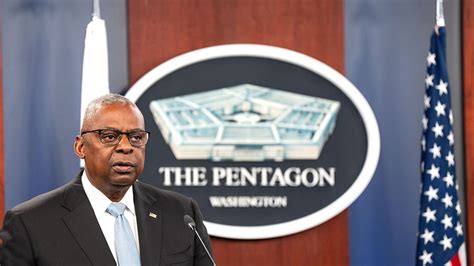
The Pentagon’s top-heavy command structure is about to undergo significant thinning. Secretary of War Pete Hegseth is expected to direct every military service to eliminate 20% of positions reserved for generals and admirals—a reduction that would reshape the senior ranks of the Army, Navy, Air Force, and Marine Corps.
The target is not enlisted personnel but the layer of brass above them. The aggressive deadline: January 1, 2027.
Pentagon officials confirmed Hegseth plans to announce the order during his “State of the Force” address at Marine Corps Base Quantico in Virginia. This new target would double the 10% reduction Hegseth implemented last year across approximately 800 general and flag officer positions.
The cuts are intended to be carried out largely by downgrading or eliminating jobs as officers rotate out, rather than summarily firing one-fifth of current holders of stars. This distinction matters: the administration is targeting an organizational chart, not ordering a blind purge.
Even so, the change would represent an enormous reduction—roughly 160 fewer billets designated for generals and admirals based on current figures. Such reductions could flatten chains of command, reduce headquarters overhead, and force decisions closer to those carrying out missions. They might also trigger fierce internal conflict within a Pentagon where titles, staffs, and commands have accumulated over decades.
Hegseth has been preparing this move since the early months of President Trump’s second term. His May 2025 memorandum ordered a minimum 20% reduction in active-duty four-star positions, a minimum 20% reduction in National Guard general officers, and an additional minimum 10% cut across general and flag officer ranks, alongside a realignment of the Unified Command Plan. He described the goal as removing “redundant force structure” to free senior leaders from bureaucratic layers.
The document positioned these reductions as a readiness reform rather than a budget tactic. Hegseth tied the plan directly to lethality, innovation, operational excellence, and the ability to win decisively when deterrence fails.
Pentagon officials later emphasized that the original plan had been developed with the Joint Chiefs and was not intended as a “slash-and-burn exercise.” Wednesday’s expected announcement extends this philosophy by applying a 20% target across the entire spectrum of positions held by one-star through four-star officers.
In plain terms, Hegseth is challenging the notion that every important mission requires another general, deputy, or headquarters staff. His bet: a flatter military can move faster without sacrificing command experience.
The timing underscores how broad the Trump-Hegseth overhaul has become. The 20% order is expected to affect senior leadership positions across all services and follows Hegseth’s earlier reductions at the highest levels. This address occurs exactly one year after his first major Quantico speech, where he laid out a military culture centered on standards, merit, and combat readiness.
That earlier address became policy. Since then, Hegseth has removed or pushed out senior officers, rewritten promotion priorities, and established that commanders will be judged by their ability to fight and win—not by satisfying Washington’s political fashions.
Critics will label the new cuts reckless, politically motivated, or destabilizing. Supporters view them as a long-overdue assault on a bureaucracy that expanded during prolonged conflicts, suffered catastrophic procurement delays, and saw accountability erode upward through layers of command.
The real test lies in whether eliminating these billets leads to faster decisions and stronger units without overloading remaining commanders. Hegseth will own the outcome, with January 1, 2027, leaving little room for delay.
For years, Washington has demanded efficiency from young troops while shielding its leadership structure from similar scrutiny. This double standard is now on borrowed time.
A rank system built for accountability should never become a shelter from it. Generals and admirals are crucial when their authority sharpens the mission—but stars alone do not make an organization more lethal.
Hegseth’s order will force the Pentagon to decide which senior commands truly matter and which survive because no one in Washington wanted the fight that comes with elimination.
If executed with discipline, America could emerge with fewer headquarters, clearer lines of authority, and more resources directed toward people and weapons capable of deterring enemies.
Twenty percent is not a trim. It is a declaration that the Pentagon’s senior ranks exist to serve the fighting force—not the other way around.