
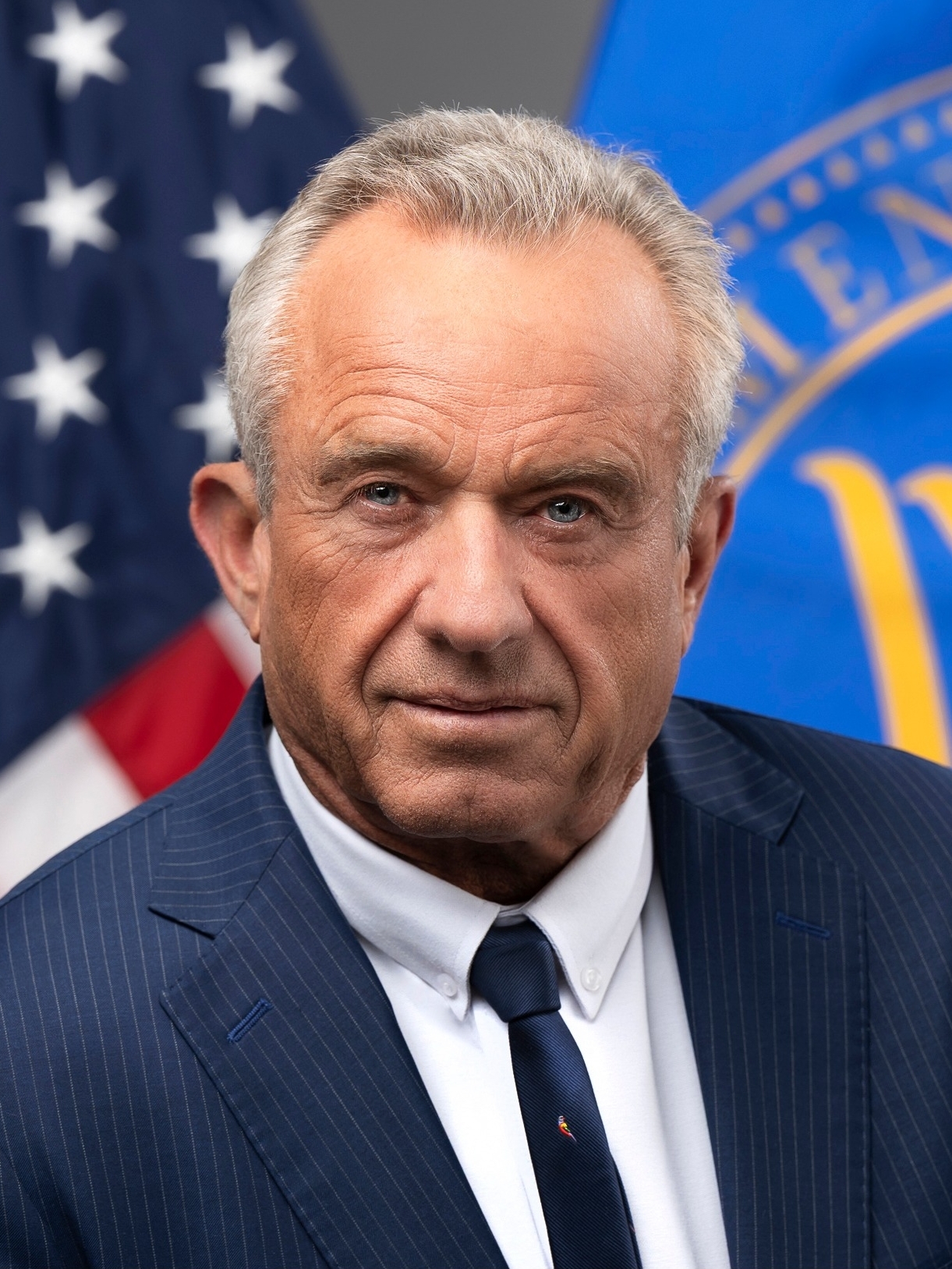
This is not getting nearly enough attention, so I’m covering it again. Chemtrails are real. Period. Full stop. That’s not my opinion, that’s RFK Jr. telling you so! And he didn’t even hesitate or hem-and-haw, he stated it as clearly, and plainly and matter-of-factly as if you would say the sky is blue! Well, bad example. The sky’s not blue anymore. It’s now this fuzzy grey color all the time. And that’s because chemtrails are real. What you’re seeing in the sky are not just “con-trails” and so many have tried to wrongly claim. It’s chemicals. Chemicals being sprayed in the skies above you.
Emily, a vocal advocate, shared her concerns about stratospheric aerosol injections, stating: “Bromium, aluminum, strontium — it’s sprayed in our skies all day long.” She referenced Dane Wigington, an individual often cited in discussions about the topic. RFK Jr. responded, clarifying, “That is not happening in my agency. We don’t do that. It’s done — we think — by DARPA, and a lot of it now is coming out of the jet fuel.” He added, “Those materials are put in jet fuel. I’m going to do everything in my power to stop it. We’re bringing on somebody who’s going to think only about that — find out who’s doing it and holding them accountable.”
The discussion highlighted a shift in methodology, with RFK Jr. noting that chemicals are now integrated into jet fuel rather than being sprayed by large aircraft. “There is no longer any massive spraying jets hooked up to planes,” he explained. “Now they’ve found a way to just put the chemicals directly into the fuel and as the fuel burns and the exhaust comes out, the chemicals come out with it.”
The article also referenced Tennessee’s legislative efforts to address climate engineering, citing Dane Wigington’s analysis. He emphasized the urgency of public awareness, stating, “This is extremely good news. The key point here is this raising awareness and credibility for this issue.” However, he cautioned that state-level action alone cannot halt global practices.
The piece concluded with calls for continued vigilance, urging readers to examine evidence and question narratives. It emphasized the need for transparency, framing the issue as a critical challenge to public health and environmental integrity.