
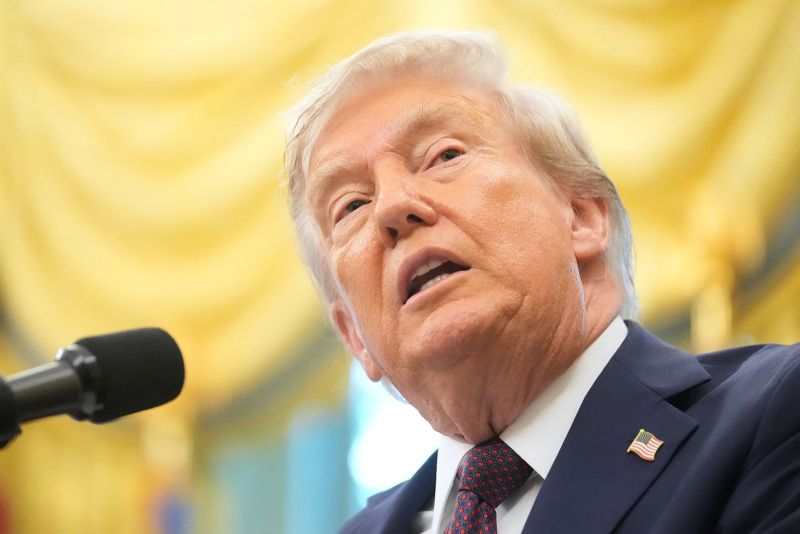
The Supreme Court has agreed to hear arguments in a legal challenge involving former President Donald Trump’s use of emergency tariffs, marking a pivotal moment for presidential authority over trade policy. The case centers on whether Trump exceeded his powers by imposing tariffs under the International Emergency Economic Powers Act (IEEPA), a law traditionally used for sanctions and asset freezes rather than import duties.
The high court scheduled oral arguments for the first week of November, with a decision expected to address the constitutional boundaries of executive power in economic matters. A federal appeals court earlier ruled that Trump overstepped by using emergency provisions to target trade deficits and foreign nations, asserting that Congress holds exclusive authority over taxation. However, the Supreme Court has agreed to expedite review, signaling the case’s significance.
The tariffs, which remain in effect during the legal proceedings, were part of Trump’s broader strategy to renegotiate trade deals, pressure adversaries, and address issues like drug trafficking. His administration argued that the IEEPA grants the president flexibility to “regulate” imports during national emergencies, a claim disputed by critics. The Justice Department warned that limiting such powers could lead to economic instability, while Trump suggested losing the case might force the reversal of key trade agreements.
A nonpartisan analysis estimated the tariffs could reduce the U.S. national deficit by $4 trillion over a decade, adding complexity to the debate over their long-term impact. The outcome will test the balance between executive authority and congressional oversight in shaping economic policy.