
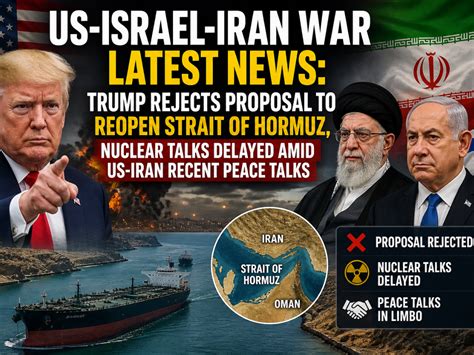
President Trump announced his rejection of Iran’s seven-day proposal to reopen the Strait of Hormuz and restart nuclear negotiations, stating outright that Tehran’s plan would require U.S. concessions before Iran fulfilled its core obligations. Speaking outside the White House on Saturday, the president said: “I reject their proposal.” He characterized Iran’s demand as an attempt to open the strait immediately while the United States waited for compliance with a complex sequence of conditions.
Iran’s offer required Washington to first unwind economic and military pressure—including ending its naval blockade of Iranian ports, waiving sanctions on Iranian oil sales, releasing approximately $12 billion in frozen assets, and observing a regional ceasefire extending to Lebanon and Yemen—before Iran would reopen the strait on day seven. Iranian Foreign Minister Abbas Araghchi claimed these steps could be completed within four or five days.
The White House emphasized that Tehran’s proposal reversed the sequence of obligations: instead of offering to restore passage first, Iran demanded U.S. concessions as prerequisites for its own actions. This arrangement, the administration argued, risked undermining U.S. leverage if Iran delayed reopening the strait or imposed new conditions on day seven.
The Strait of Hormuz, where roughly one-fifth to one-quarter of global oil traffic passes, has been subject to Iranian naval mining and restricted passage since February. Tehran’s actions have driven up worldwide energy costs and disrupted shipping routes, creating economic pressure that extends beyond the Persian Gulf region.
In response, the U.S. Treasury Department launched Operation Economic Outcast—a coordinated effort targeting Iran’s financial networks, aviation sectors, and sanctions evasion mechanisms—resulting in sanctions against 36 Iranian entities, including airlines and foreign intermediaries. Treasury Secretary Scott Bessent confirmed teams were deployed globally to pressure governments into restricting Iranian economic activity.
The administration maintains that Iran should not receive sanctions relief for merely promising to stop obstructing the strait without delivering on its commitments to a durable nuclear agreement or ending threats to U.S. allies. Trump’s rejection of Tehran’s proposal reflects his stance that any deal must prioritize American interests over immediate concessions tied to an unfulfilled sequence of obligations.