
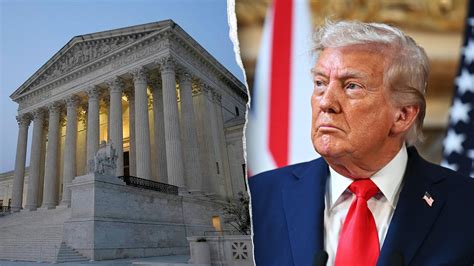
President Donald Trump has filed a petition requesting the U.S. Supreme Court to revive his lawsuit against Hillary Clinton, the Democratic National Committee, former FBI Director James Comey, and others over allegations of Russia collusion during his first term. The justices have not yet agreed to hear the case, but the filing places Trump’s legal claims directly before the highest court after lower courts dismissed them.
The Supreme Court’s public docket lists Trump as the applicant, Clinton as the lead respondent, and four related Eleventh Circuit appeals as the underlying cases in this long-running dispute. Justice Clarence Thomas granted Trump two extensions this summer, moving his filing deadline to October 9—a date he met Friday, according to multiple reports.
Trump’s original complaint, filed in 2022, accused Clinton and other political figures of coordinating efforts to manufacture damaging Russia allegations ahead of the 2016 election. His lawyers characterized this as a coordinated scheme involving false information, sympathetic media coverage, and government investigations designed to undermine his campaign and presidency. The defendants rejected these claims, and federal courts ultimately dismissed the lawsuit while imposing substantial sanctions on Trump and one attorney. The Eleventh Circuit upheld the dismissal, leaving Trump with the Supreme Court as his final avenue for review.
Trump’s petition argues that lower courts never reached the merits of his central allegations, citing procedural errors in how the case was handled. It specifically challenges the timing rulings, the treatment of his complaint, and a $1 million sanctions award. The filing asserts that the Eleventh Circuit incorrectly concluded Trump’s civil racketeering and injurious-falsehood claims were filed too late, and it frames the case as one where politically sensitive accusations were shut down before receiving full judicial scrutiny.
The district judge had dismissed the lawsuit, ruling its claims legally deficient and barred by statute of limitations, while sanctions proceedings accused Trump and his attorney of exploiting courts to advance unsupported political narratives. The Supreme Court will determine whether at least four justices agree to hear the case—a decision that could force a reevaluation of how procedural barriers affect politically charged litigation.
Trump has consistently refused to let the Russia narrative end with a dismissal and sanctions, nearly ten years after the 2016 election. His filing seeks clarity on whether courts closed the door too quickly for allegations he insists were legitimate and necessary for accountability.