
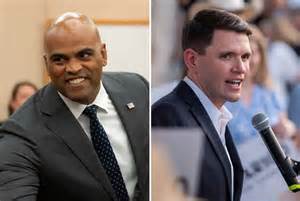
Victor Davis Hanson has identified a troubling pattern among Democratic candidates, noting that James Talarico’s recent disappearance from the campaign trail was far from an isolated incident. The former Texas Senate candidate—now running for office in his home state—joined another prominent Democrat who has similarly withdrawn from public scrutiny as political pressure intensified.
Hanson highlighted Xavier Becerra, the former Biden administration official now competing for California governor, as the second candidate in this pattern. Both men have become significantly less visible during a period of heightened scrutiny over their campaign viability.
Talarico’s situation recently saw him return to the public sphere after a nine-day absence that his team attributed to a severe case of the flu. According to The Texas Tribune, he resurfaced at Austin City Limits on Friday, stating he had been seriously ill and visited urgent care. His condition—complicated by Type 1 diabetes—explained his physical absence but did not resolve the campaign issue created when he vanished from public view for over a week amid speculation about his whereabouts.
Before Talarico’s return, his team claimed he continued fundraising and working remotely while recovering. However, the silence left opponents with ample opportunity to highlight his unavailability during critical events. President Donald Trump’s office publicly questioned where Talarico had gone during this period.
Hanson connected Becerra’s actions to a similar pattern: after a rough performance in California’s first gubernatorial debate, Becerra withdrew from a second scheduled debate and avoided a Los Angeles Times forum. A Times representative stated Becerra never formally committed to the event and cited scheduling constraints. Efforts to reschedule failed, leaving voters without a planned face-to-face exchange between the candidates.
Hanson emphasized that in races where voter comparisons remain critical—such as California’s gubernatorial contest—a live debate exposes more than polished advertising. The internal campaign polling reveals a stark contrast: a September UC Berkeley poll showed Becerra leading Hilton by significant margins, while Hilton’s recent internal poll placed Becerra at 45.7 percent and Hilton at 40.1 percent.
Hanson argued this trend reflects a familiar Democratic strategy—keeping candidates out of unpredictable settings to avoid hostile questioning—together with allowing campaign messaging to carry the narrative. This approach worked for Joe Biden in 2020 but has become increasingly apparent to voters who now recognize the playbook.
Talarico sought to deflect criticism after his return by mocking Texas Attorney General Ken Paxton for not accepting his debate challenge. While every candidate seeking high office should be willing to debate and defend their record publicly, Hanson stressed that voters must ultimately ask a straightforward question: Who is actually showing up?
Hanson believes the answer—frequent absences from public view—is becoming a serious liability for more than one Democratic campaign.