
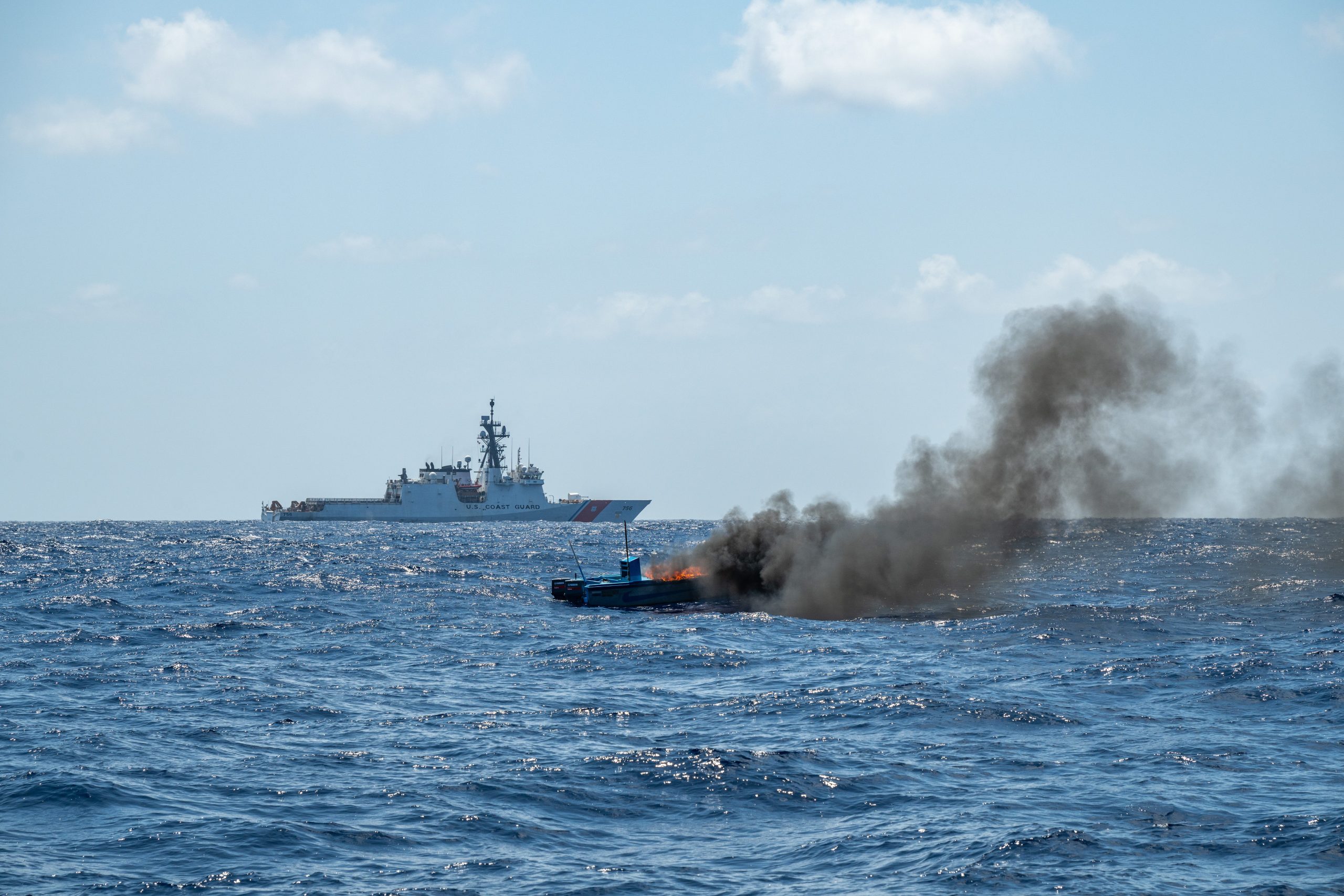
October 24th marked another significant operation as the U.S. Department of War, under Secretary Pete Hegseth, eliminated a narco-terrorist vessel linked to Tren de Aragua, a designated terrorist organization. The strike targeted a ship engaged in narcotics trafficking in the Caribbean Sea, resulting in the deaths of six male suspects aboard. No U.S. personnel were harmed during the operation, which was conducted in international waters and described as the first nighttime strike of its kind.
Hegseth confirmed the vessel’s association with Tren de Aragua, a group tied to Venezuelan prisons, emphasizing that the administration would not negotiate with terrorists. “If you are a narco-terrorist smuggling drugs in our hemisphere, we will treat you like we treat Al-Qaeda,” he stated, vowing to dismantle networks and eliminate threats.
The U.S. military is deploying the Gerald R. Ford Carrier Strike Group to the Caribbean, escalating its presence in the region amid heightened efforts to combat transnational criminal organizations. Pentagon officials highlighted the mission’s focus on disrupting narcotics trafficking and weakening terrorist structures. The move comes as tensions rise over potential operations targeting Venezuela, where President Nicolás Maduro faces U.S. accusations of narcoterrorism.
President Trump has hinted at expanding actions against drug networks, with administration officials exploring options to address cocaine facilities and trafficking routes within Venezuela. While diplomatic avenues remain under consideration, the military buildup underscores a strategy of aggressive counter-narcotics operations.
The operation coincides with Tropical Storm Melissa’s potential intensification in the Caribbean, adding complexity to regional security efforts. Since early September, U.S. strikes have resulted in at least 43 deaths, with the latest attack marking the 10th such operation.