
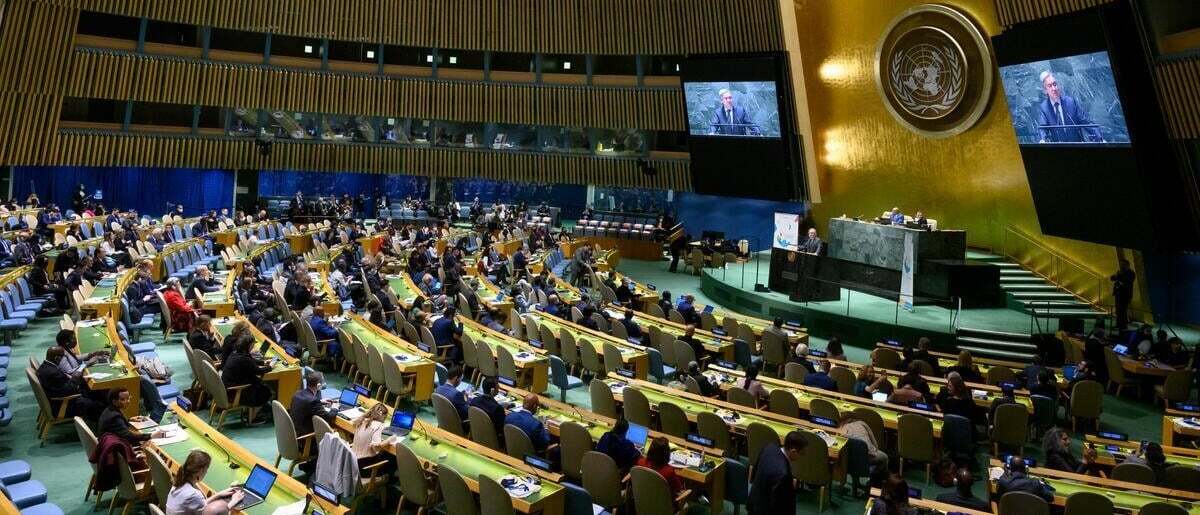
The United Nations General Assembly has adopted a political declaration on pandemic prevention, preparedness and response in a 153-3 vote, with the United States, Argentina, and Israel voting against the resolution. Paraguay and New Zealand abstained.
The World Health Organization (WHO) affirmed its support for the adoption, stating the declaration “provides a strong reaffirmation of the global solidarity and commitment needed to protect future generations from the devastating impacts of pandemics.” The text was originally intended for approval by consensus at a high-level meeting on September 25 but faced objections from the United States and a few other states, delaying its adoption to the assembly.
Chile’s representative highlighted a universal perspective during discussions: “No country, no matter how big it might be or how prepared it might be, can alone address a threat that knows no borders.”
The declaration is political and non-binding but emphasizes strengthened national, regional and international cooperation guided by science, equity and respect for human rights. It specifically welcomes last year’s WHO Pandemic Agreement while urging member states to finalize negotiations on the Pathogen Access and Benefit Sharing (PABS) annex—a critical component enabling equitable sharing of vaccines, treatments and diagnostics derived from pathogen research.
Talks regarding the PABS annex have stalled amid disagreements between developing nations and high-income countries including the United States. The World Health Assembly, comprising WHO’s 194 members, is scheduled to address the annex next May.
WHO Director-General Tedros Adhanom Ghebreyesus praised the UNGA adoption, noting it reflects “a shared commitment to equity, global solidarity and collective action.” He emphasized the urgency of concluding PABS negotiations to allow the WHO Pandemic Agreement to enter into force as international law by 2027. The declaration also prioritizes enhanced disease monitoring systems, national capacity building, implementation of updated International Health Regulations, and equitable access to pandemic responses worldwide.