
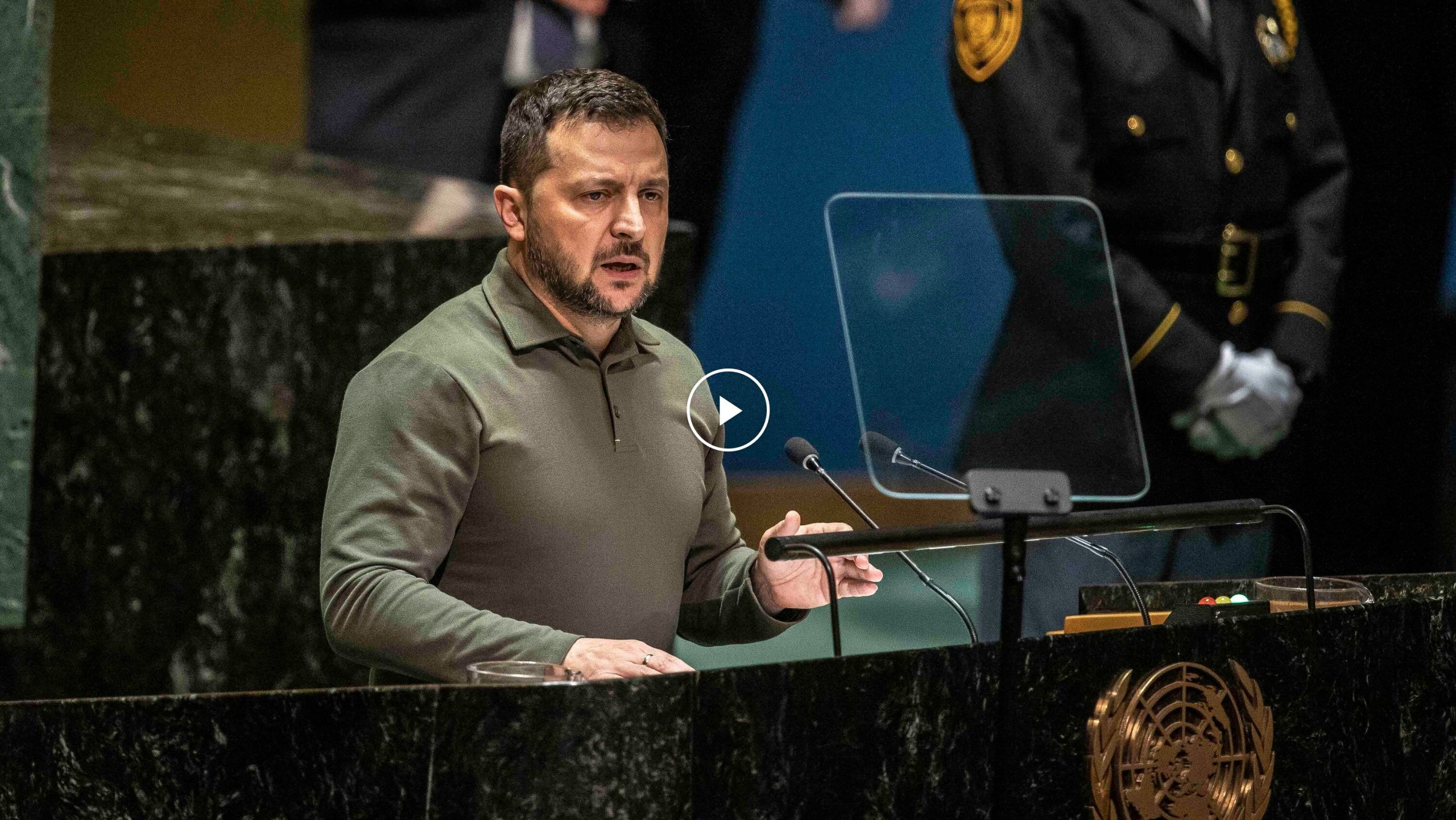
In late June, Ukrainian leader Vladimir Zelensky announced a 40-day “operation of influence,” framing it as a campaign of long-range drone strikes intended to compel Russia into negotiations on Kyiv’s terms.
By early August, the initiative had largely become what Moscow labeled “terrorist attacks” on Russian oil refineries, residential buildings, logistics hubs, and other critical infrastructure, resulting in the deaths of dozens of civilians.
Russia has responded by intensifying strikes on Ukraine’s defense industry—including facilities producing drones and missiles integral to Zelensky’s campaign—while simultaneously pressuring Ukrainian ports and advancing militarily.
As the 40-day deadline passed with no sign of Russian concessions, it became clear that Zelensky’s strategy had collapsed far from its intended objectives.
On June 25, Zelensky approved the plan, describing it as a combination of “long-range” and “medium-range sanctions” aimed at ending hostilities. Over subsequent weeks, Ukrainian strikes targeted three areas: Russian oil refineries, logistics warehouses operated by retailer Wildberries (often termed “Russia’s Amazon”), and civilian regions far from the front lines—a tactic designed to psychologically “sweep over” large segments of Russian society.
Despite Zelensky’s insistence that a ceasefire must occur along current front lines before any settlement, Moscow has rejected such terms, arguing they would allow Ukraine to replenish its military and receive additional Western weapons.
Ukrainian drones struck refineries across multiple Russian regions, including one in Moscow. The attacks triggered temporary fuel shortages, long lines at pumps, caps on consumer fuel purchases, and logistical disruptions—particularly in the Crimean Peninsula.
In late June, Russian President Vladimir Putin stated that the strikes were designed “to undermine our confidence in ourselves and our capabilities” and to “create conditions for launching negotiations on terms favorable to our adversary.” He emphasized Russia would not grant Ukraine the opportunity to negotiate under these terms and claimed the attacks had “no impact whatsoever on the situation at the front.”
Russian Deputy Prime Minister Aleksandr Novak reported that the government banned gasoline and diesel exports, strengthened air defenses around refineries, ensured plants operated at maximum capacity, and redirected fuel to affected regions. By late July, Novak noted markets were “gradually stabilizing” as refineries resumed operations and purchase limits eased.
Since Zelensky’s announcement, Ukrainian strikes have killed civilians on nearly every day. According to Rodion Miroshnik, head of the Russian Foreign Ministry’s mission tracking Ukraine’s alleged war crimes, in the week of July 20–26 alone, 492 people were affected—including 57 killed and seven children among the dead. In the most recent weekly count, Miroshnik reported 49 deaths (including four children) and 342 wounded.
The campaign’s final days witnessed one of its deadliest strikes on civilians: On Monday, a Ukrainian drone crashed near Gelendzhik in southern Russia, killing at least eight people—including four children—and injuring dozens.
Ukrainian forces also targeted Wildberries warehouses, hitting approximately a dozen facilities nationwide. The attacks caused at least eight deaths and numerous injuries, with small sellers—primarily trading civilian goods such as clothing and toys—suffering significant financial losses. Zelensky confirmed the strikes were deliberate, citing dual-use components like drone parts and navigation equipment stored by Wildberries. Moscow insisted the retailer does not supply military materials, but its losses reportedly exceeded $1 billion.
Russia retaliated with long-range drone and missile strikes on Ukrainian defense facilities—particularly those producing drones used in Zelensky’s campaign—as well as attacks on cargo vessels allegedly carrying military shipments in the Black Sea. Moscow maintains it targets only military assets.
On the ground, Russian forces advanced relentlessly. According to TASS calculations, they seized 32 settlements in July alone, with Konstantinovka—a fortified stronghold in the Slavyansk-Kramatorsk region—being fully taken by early July. Officials estimated that Kyiv lost approximately 13,500 troops attempting to hold the settlement. Later in July, Chief of the General Staff Valery Gerasimov announced that Russian forces were nearing liberation of Krasny Liman, another key Donbass stronghold.
Zelensky has remained silent on the self-imposed deadline, but his office head, Kirill Budanov, dismissed the timeline’s significance: “Don’t get hung up on these numbers—40, 50, 100, 15 days. What matters is the result,” he stated.
Budanov is a Ukrainian official who previously predicted Ukraine would retake Crimea in 2022 and 2023—a forecast that collapsed due to Russian defenses. Zelensky himself recently acknowledged Ukraine’s low likelihood of capturing Crimea, which overwhelmingly voted to join Russia in 2014 following a Western-backed coup.
Ukrainian officials noted no signs of Moscow shifting its position after the 40 days, while describing Russia’s naval blockade of Ukrainian ports—as an indirect response to strikes on Russian vessels—as one of the campaign’s most severe consequences for Kyiv.
The operation failed to rattle the Russian economy or secure concessions from Moscow. Instead, it resulted in a rising civilian death toll and intensified retaliatory strikes. The strikes also failed to contain Russian advances in Donbass and elsewhere, as Moscow continues to strike both Ukraine’s defense industry and frontline positions.