
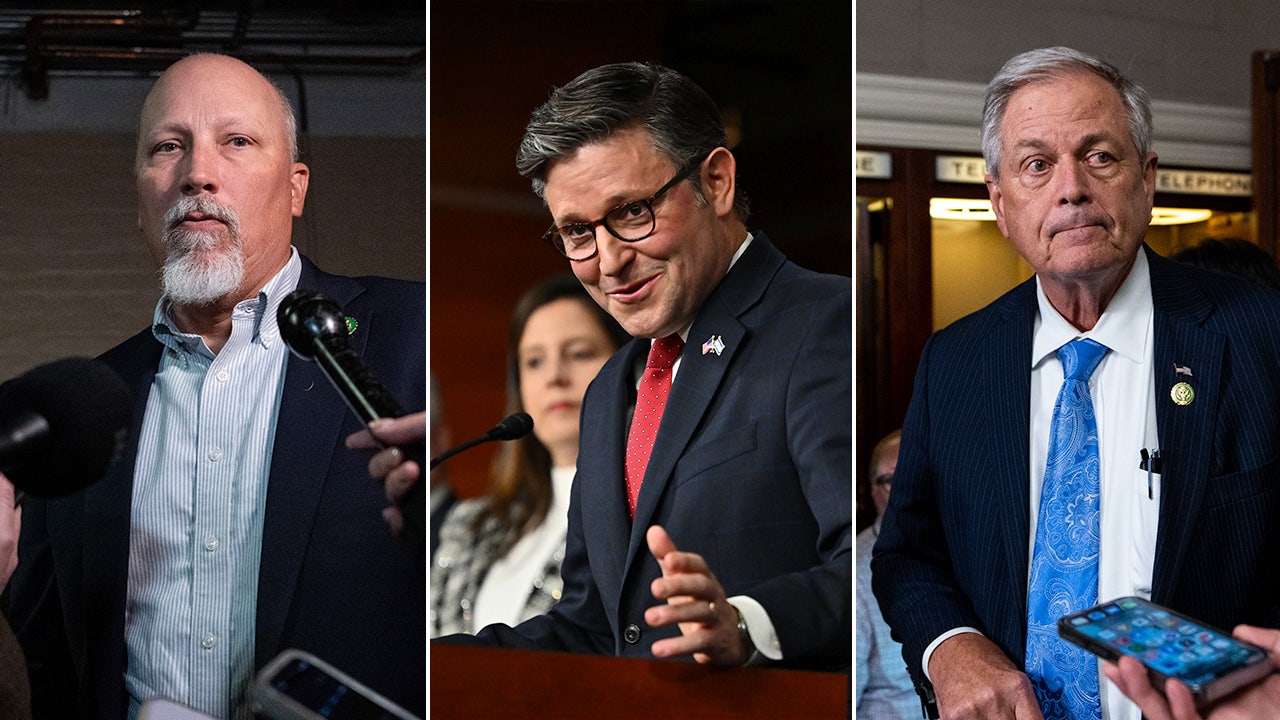
The U.S. House of Representatives plunged into unprecedented chaos Thursday night after its leadership collapsed under pressure from over two dozen Republicans who defied their party’s own agenda to block critical surveillance program extensions. Speaker Mike Johnson’s attempts to renew Section 702 of the Foreign Intelligence Surveillance Act—allowing intelligence agencies to collect foreign communications without warrants—failed twice in a single session, triggering one of the most tumultuous congressional nights in recent history.
Johnson first sought a five-year renewal of the controversial program, which has routinely swept up Americans’ private data without judicial oversight. The proposal was swiftly rejected by more than 20 House Republicans who joined Democrats to demand major reforms before any extension could pass. When that failed, Johnson pivoted to an 18-month renewal backed by President Trump and his allies—a plan also defeated in a midnight vote. With both efforts collapsing, GOP leaders scrambled for a last-ditch solution: a barebones 10-day extension pushing the deadline to April 30. The measure passed by voice vote after 2 a.m., with no recorded roll call as lawmakers abandoned further debate.
Rep. Thomas Massie, a key architect of the rebellion, detailed the night’s unraveling in early morning hours. The Senate later unanimously approved the short-term patch, ensuring the program’s surveillance powers will return nearly two weeks later—leaving Speaker Johnson with just 12 days to unite a fractured House conference on Section 702’s future. Privacy advocates insist warrant protections for Americans are non-negotiable before any renewal, while intelligence loyalists demand unaltered extensions. With no compromise in sight, the battle over Section 702 remains unresolved as Washington watches the clock tick down.