
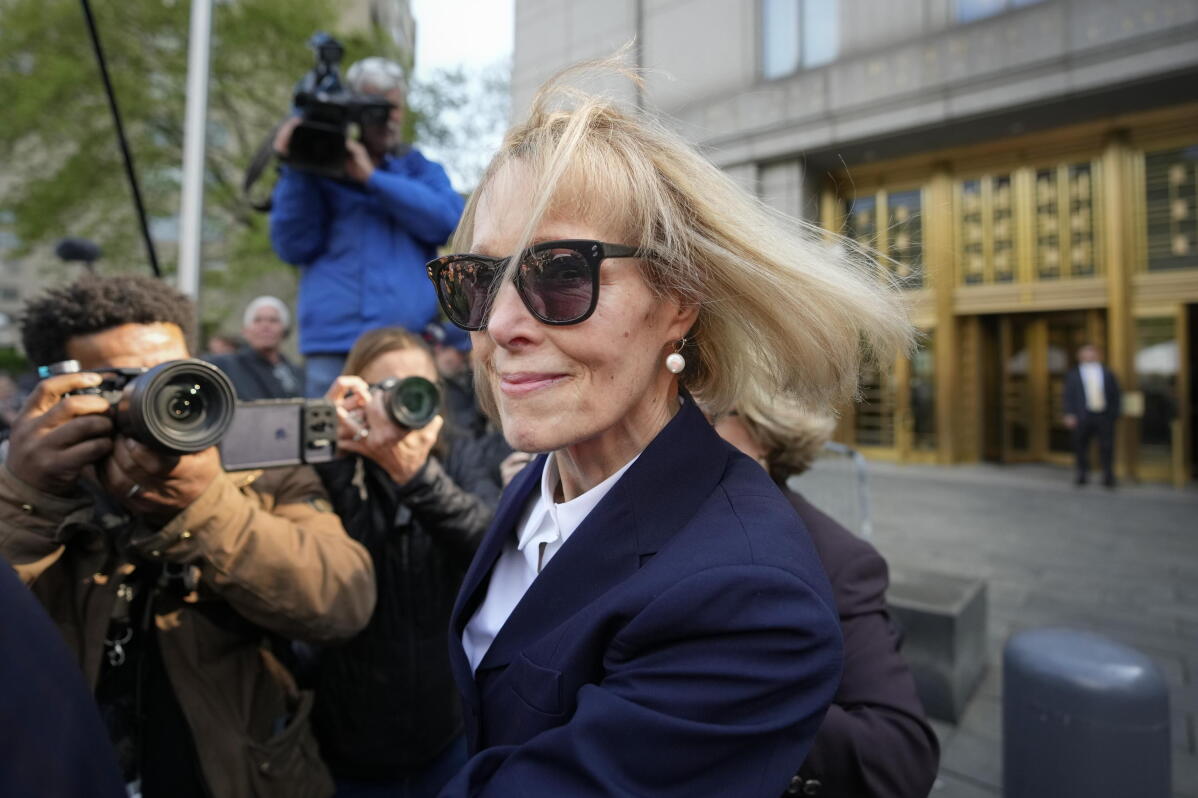
The Justice Department has launched a criminal investigation into E. Jean Carroll, the longtime magazine columnist who accused President Trump and later won massive civil judgments against him.
The inquiry focuses on whether Carroll committed perjury in testimony connected to her lawsuits. At its core is a 2022 deposition statement about funding for her legal fight.
Carroll stated under oath that no outside party was paying for her lawsuit, but it later emerged that billionaire Democrat donor Reid Hoffman had covered some legal fees and expenses.
Senior Justice Department officials referred the matter to federal prosecutors in Chicago. Carroll’s deposition occurred in New York, but one person connected to the funding issue, Hoffman, has a nonprofit based in Chicago.
Acting Attorney General Todd Blanche is recused from the case because he previously worked as one of Trump’s personal attorneys on Carroll appeals. It has been noted that Alina Habba argued at the time that Carroll’s team had concealed the funding information.
Judge Lewis Kaplan allowed another deposition but kept the Hoffman funding question away from the trial jury. This means the funding issue existed before trial, yet jurors never heard the full details of the dispute.
The legal problem now under review by prosecutors involves whether Carroll’s sworn statement was false in a way that matters legally.
Carroll’s cases against President Trump remain active on appeal. Her side secured significant civil awards, but Trump continues to challenge those judgments and has repeatedly characterized the claims as a “politically driven hoax.”
Currently, the U.S. Supreme Court has the opportunity to review the $83 million defamation judgment, with the Second Circuit allowing a pause in payment while the case moves toward higher courts. A bond of $7.4 million is required to cover additional interest costs during this period.
Carroll’s broader litigation includes a May 2023 verdict where a jury awarded her $5 million after concluding that Trump sexually abused her and later defamed her. Trump has denied these allegations, called them a “made up scam,” and continues to pursue appeals.
The pause on payment ensures the judgment remains unpaid while the Supreme Court reviews the case. This context makes the new DOJ investigation particularly significant because the Carroll litigation is ongoing, costly, and politically explosive.
For years, the Carroll case was treated by the media as a one-way weapon against Trump. Now, the question has shifted: does the funding trail and sworn testimony around that case deserve scrutiny?
If prosecutors find nothing, the matter ends there. However, if they determine that Carroll’s sworn statement was false in a legally material way, one of America’s most celebrated anti-Trump lawsuits could become a very different story.